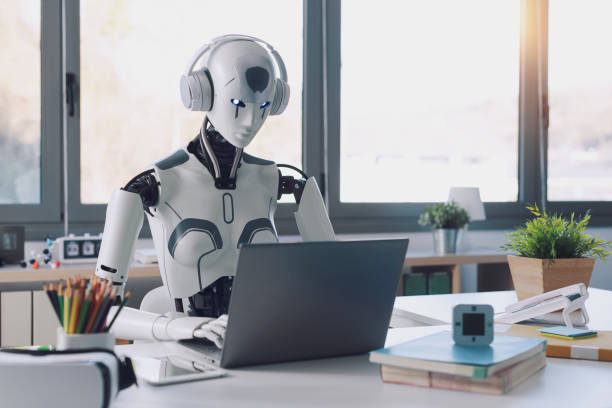
Artificial Intelligence has moved from science fiction to daily life faster than any technological shift in human history. As India transitions into a digital-first economy, questions are emerging not only in tech hubs like Bengaluru and Hyderabad but even in classrooms, newsrooms, graphic studios, and rural innovation labs: Will robots replace human creativity or will they redefine it?
This debate is now central to India news, policy discussions, national affairs, and the evolving creative ecosystem of the country. With India becoming a global AI hub under initiatives like Digital India, IndiaAI Mission, and National Education Policy (NEP 2020), the conversation is no longer limited to “Can AI do creative work?” — it now expands toward, “What will creativity even mean in the age of intelligent machines?”
This long-form report evaluates the rise of AI-generated content, the future of creativity with automation, how Indian government policies are shaping innovation, and how artists, writers, students, and professionals can adapt to the coming revolution.
The Creativity Debate: Why Now? Why India?
Creativity was traditionally viewed as the last human frontier — the one ability machines would never replicate. Yet today:

- AI writes short stories and scripts.
- Robots compose music that trends on apps.
- Tools like DALL·E, Midjourney, and Adobe Firefly generate art in seconds.
- Voice AI can mimic singers and recreate their tone perfectly.
- Large language models craft content faster than any human writer.
The question is no longer “Will AI replace creative jobs?” but rather “Which aspects of creativity will remain uniquely human?”
In India, this debate matters more because the country has:
- One of the world’s largest creative workforces – writers, designers, filmmakers, musicians, journalists.
- A fast-growing startup ecosystem integrating AI into every sector.
- Government-backed missions promoting AI adoption.
- Youth-driven innovation — India has the youngest workforce globally.
This intersection makes India the perfect ground to analyze whether AI threatens creativity or expands it.
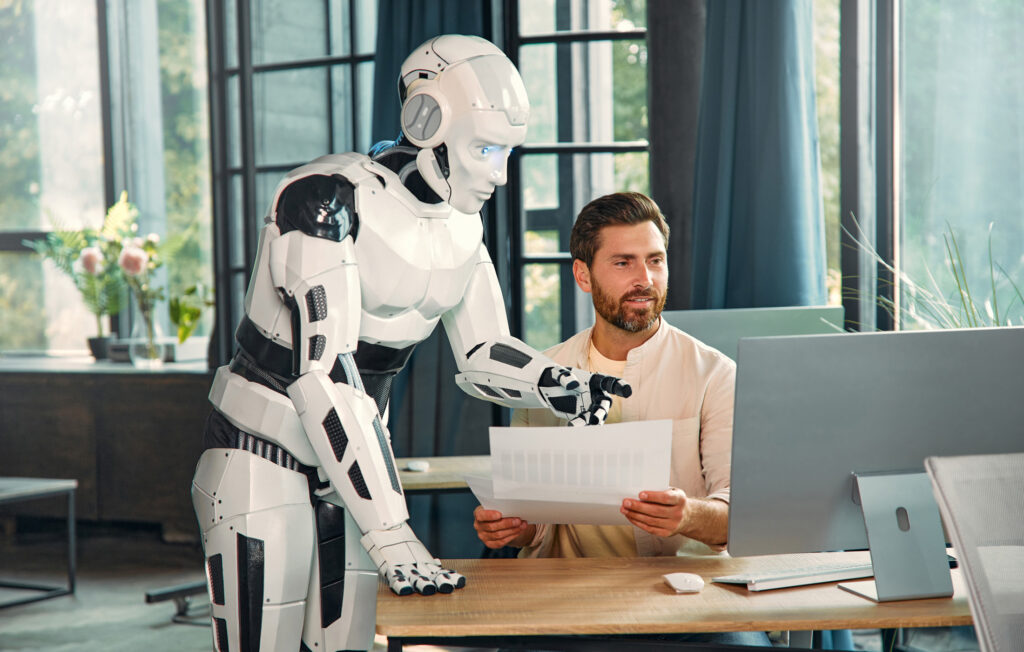
Historical View: Creativity Before Machines Entered the Picture
Before automation, creativity was pure craftsmanship.

- A writer spent days refining a paragraph.
- A painter spent months on a canvas.
- Filmmakers worked tirelessly for years on a movie.
- Musicians practiced for decades before achieving mastery.
Yet history shows that every technological leap changes creativity:
When Cameras Were Invented
Painters feared they would become irrelevant. Instead, photography became its own art form, and painters shifted to abstract styles.
When Computers Arrived
Typists disappeared; writers evolved.
Designers shifted from hand-drawn visuals to Photoshop and Illustrator.

When the Internet Spread
Content exploded. Millions became bloggers, artists, and creators.
We see a pattern:
Technology doesn’t destroy creativity; it transforms it.
AI is simply the newest catalyst.
The New Era: Human vs Machine Creativity
AI creativity is synthetic, derived from patterns, algorithms, and vast datasets.
Human creativity is experiential, emotional, and unpredictable.
Key differences:
1. AI Creates from Data; Humans Create from Life
AI can combine millions of styles, but it has no lived experiences, trauma, memories, culture, or emotions.
A poem about heartbreak written by AI is structurally perfect — but emotionally hollow.
2. AI Is Fast; Human Creativity Is Meaningful
A human may take hours to craft a metaphor.
AI generates 20 alternatives instantly.
But humans give meaning; machines give options.
3. AI Is Imitative; Humans Are Inventive
AI imitates patterns.
Humans break patterns.
4. AI Generates; Humans Imagine
Machines cannot dream, rebel, wonder, or question the universe.
This distinction explains why creative fields fear automation yet rely on it.
Examples from India: Where AI Is Already Reshaping Creativity
India’s creative sectors — journalism, cinema, marketing, education, and design — are actively integrating AI.
Indian Newsrooms Using AI
Several digital newsrooms use AI tools to:
- Generate headline variations
- Transcribe interviews
- Summarize long reports
- Assist with fact-checking
But editorial judgment, ethical considerations, and storytelling remain human.
Bollywood and Regional Cinema
AI is being explored for:
- Pre-visualization of scenes
- Script brainstorming
- Creating VFX
- De-aging actors
- Marketing campaigns
The Mumbai film industry sees AI as an accelerator, not a replacement.
Indian Startups in Creative AI
Startups in Bengaluru and Gurgaon develop tools for:
- AI copywriting
- AI-based video editing
- AI animation
- AI in advertising and branding
The sector is estimated to grow multi-fold under the IndiaAI Mission.
Government and Policy: How India Is Preparing for AI Creativity
India has strategically positioned itself to lead globally in AI and innovation. Key initiatives include:
1. IndiaAI Mission
Aims to boost AI innovation, build computing capacity, and make India a global AI powerhouse.
2. Digital India Initiative
Promotes digital literacy, access to technology, and tech-driven growth.
3. NITI Aayog’s National Strategy for Artificial Intelligence
Focuses on AI for education, healthcare, agriculture, and governance.
4. NEP 2020 Emphasis on Creative Thinking
The National Education Policy encourages:
- Critical thinking
- Design thinking
- Applied creativity
- Integration of AI in curriculum
Under NEP, creativity is no longer just an ability; it’s a measurable skill set.
5. Skill India + MeitY Projects
Prepare youth for:
- AI-based jobs
- Digital media roles
- Creative technology careers
India isn’t preparing students to compete with robots — it’s preparing them to lead robots.
A Real Story: How AI Helped a Rural Teacher in Maharashtra Become Creative Leader
In a small village near Nagpur, a teacher named Sushma Patil struggled with limited resources. Art classes were rare, and students had no access to creative tools.
With NEP encouraging tech integration, she was introduced to a free AI art tool through a local training program.
What happened next was remarkable:
- Students began creating posters for school events.
- AI helped them visualize solar system diagrams.
- A girl used AI to design embroidery patterns for her mother’s tailoring shop.
- The school won a district-level “Creative Tech Innovation” recognition.
Sushma says,
AI did not replace our creativity. It unlocked creativity we didn’t know we had.
This is the story of thousands of educators, artists, and youths across rural India adopting AI as a creative companion.
How AI Tools Are Changing Artists, Musicians, and Writers
1. Artists
AI helps them:
- Generate concept art
- Try multiple color palettes
- Visualize ideas
- Speed up workflows
But final artistic judgment remains human.
2. Musicians
AI can:
- Remove background noise
- Create harmonies
- Suggest melodies
Indian indie musicians use AI for experimenting with new genres.
3. Writers and Journalists
AI assists with:
- Generating outlines
- Language correction
- Expanding ideas
- Research summaries
But storytelling, emotional depth, and narrative flow still require a human brain.
4. Designers
AI design tools automate:
- Layouts
- Icons
- Color schemes
- Wireframes
Designers now focus more on strategy and brand identity.
The Hard Truth: Some Creative Jobs Will Change
AI will not replace creativity — but it will replace some parts of creative workflows.
Jobs most affected:
- Basic graphic design
- Script formatting
- Blog drafting
- Photo editing
- Social media post variations
Jobs least affected:
- Creative direction
- Brand strategy
- Cinematic storytelling
- High-level journalism
- Cultural art forms
- Original music composition rooted in emotion
AI replaces repetition, not imagination.
Understanding the AI-Generated Content Impact
The rise of AI-generated content worries many professionals.
Concerns include:
- Decline in originality
- Content flooding
- Devaluation of artistic skill
- Ethical questions about dataset usage
- Copyright issues
- Deepfake risks
- Loss of human touch
Yet, studies show that human-AI collaboration produces:
- 40% faster output
- 28% higher creativity ratings
- Better problem-solving scores
AI becomes a co-creator, not a competitor.
Can Robots Truly Be Creative? The Scientific View
Scientists classify creativity into three types:
1. Combinational Creativity
Mixing existing ideas.
AI excels at this.
2. Transformational Creativity
Changing existing rules.
AI can attempt this with algorithms.
3. Original Creativity
Creating something from nothing.
Only humans can do this because it requires consciousness, emotional memory, and intuition.
Thus, robots are creative within boundaries, while humans create beyond boundaries.
India’s Demographic Advantage: Human Creativity at Scale
India has:
- The world’s largest youth population
- A booming creator economy
- Millions of freelancers
- Regional content creators in every state
- Cultural diversity unmatched globally
AI will enhance India’s creative potential, not replace it.
Cultural Creativity Cannot Be Automated
From:
- Warli paintings
- Rajasthani folk songs
- Odissi dance
- Urdu poetry
- Tamil storytelling
- Punjabi folk melodies
- Bengali literature
These art forms come from centuries of lived experience.
AI can imitate styles, but not the soul behind them.
What the Future Holds: Redefining Creativity in India
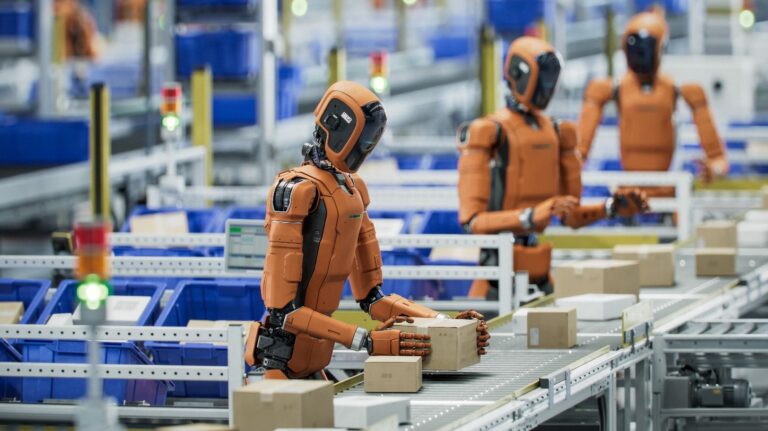
The future of creative industries will be shaped by hybrid workflows, where humans and AI collaborate.
Changes Expected by 2030
- AI-assisted filmmaking and virtual production
- Hyper-personalized advertising using AI
- AI-generated background music for daily content
- Interactive storytelling using machine learning
- Smart classrooms teaching creativity through technology
- AI fashion design analyzing local trends
- Newsrooms using AI for data-heavy reporting
- Copyright reforms to address AI content issues
- Reskilling programs under Government of India missions
India’s creative industry is set to become one of the world’s largest AI-integrated ecosystems.
Actionable Guidance: What Students, Creators & Professionals Should Do Now
For Students
- Learn AI tools used in your field.
- Build creativity with real-life projects.
- Develop critical thinking and imagination.
- Use NEP-driven digital opportunities.
For Artists & Designers
- Adopt AI as a co-designer.
- Use AI for drafts and concept exploration.
- Maintain your unique style — that is your identity.
For Writers & Journalists
- Use AI for research, not originality.
- Focus on storytelling and emotional depth.
- Improve fact-checking and investigative skills.
For Musicians
- Combine traditional instruments with AI sound engineering.
- Preserve cultural roots while innovating.
For Educators
- Train students in both creativity and digital literacy.
- Use AI to enhance learning outcomes.
For Working Professionals
- Upskill in digital tools.
- Focus on tasks requiring human judgment.
- Combine domain knowledge with creativity.
Robots Are Not Replacing Creativity — They Are Redefining It
The rise of AI is not the end of human creativity; it is the beginning of a new creative age.
Machines bring:
- Speed
- Precision
- Scale
Humans bring:
- Emotion
- Imagination
- Meaning
- Cultural depth
More Read
The future belongs to those who learn how to create with machines, not compete with them.
India, with its massive talent pool and government-backed AI ecosystem, is uniquely positioned to lead this transformation. Our creative industries, from Bollywood to Bharat’s folk traditions, will evolve — not disappear.
Creativity is humanity’s oldest strength.
AI is simply the newest tool to express it.