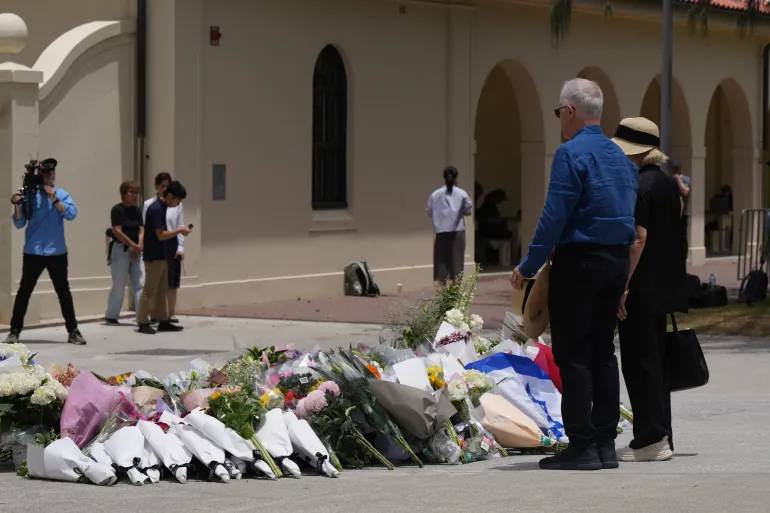
Over the past few years, the intentions of the targeted attacks at Jewish communities have become one of the most disturbing evidence of the growing religious hatred crimes of the world. Since the violent attacks around the synagogues to the extensive use of the internet through radicalisation turned into the implementation of violence, the growth of antisemitism in the world will no longer be associated with one geographical location. It is a transnational trend driven by radical ideological views, geopolitical turmoil, economic establishments, and digital platforms economy of scale.
This detailed article on India news looks into the problem of anti-Semitic attacks across the globe, their historical background, the current pattern concerning anti-Semitic violence and how the situation can get worse in the future as far as the safety of the Jews is concerned in this world. It also contextualises the problem in an Indian framework-based on the governmental views, security structures and the long held civilisational principles of pluralism in India- coupled with a practical way forward advice to institutions and professionals, as well as to the citizens.
The historical approach to antisemitism and why it is relevant nowadays
Antisemitism is not a phenomenon of the XX century. It has swam through centuries, adjusted its language and strategies to the emerging political and social situations. Medieval Europe In times of pandemics and economic crises, the communities of Jews in medieval Europe were scapegoated. Pseudo-scientific racism presented Jews as an internal enemy in the 19th and early 20th centuries. The holocaust was the greatest manifestation of this hatred and six million Jews were murdered.
The only notable fact today is not the endurance of the antisemitism, but its evolution. Although open, state-sponsored antisemitism has waned in most democracies, violence against the Jewish people has since evolved in the form of lonely wolves, digital organized hate campaigns, as well as ideologically motivated terrorism. The targets, synagogues, Jewish schools, cultural centres, and cemeteries, are symbolically strong.

Lesson of history: Antisemitism best prospers when times of instability exist. Whenever the society is going through a sudden change; economic shocks, migration, pandemics, war, the minority communities, and Jews among them are all blamed.
The contemporary antisemitic violence headquarter all around the world is mapped
An empirical increase in the assaults of Jewish communities in continents has increased by the past decade. Cases include vandalism and threats to mass-casualty attacks.
Some of the prominent trends in the world today are:
- Terrorist attractions during religious holidays or services within synagogues with the biggest possible number of people.
- Selective murder of Jewish facilities at risk such as schools and community centres.
- Radicalisation via the Internet, which praises violence and propagates conspiracy theories.
- Copycat, where an attack in one nation becomes a model of similar attacks in others.
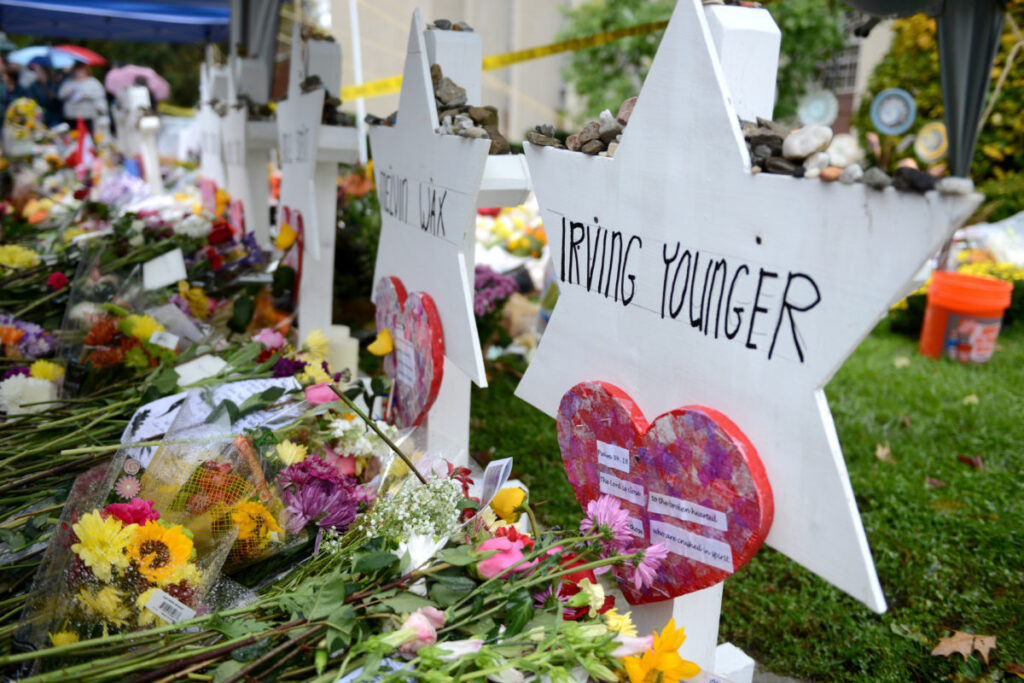
In Europe and North America, there are peaks in hate crimes against Jews that are reported to have followed significant geopolitical events in the law enforcing institutions. Antisemitic language is common in Middle Eastern and North African regional politics, frequently becoming unclear, mixing political critique and religious hatred.

Unconventional truth: Argivally speaking, Jewish communities are a small proportion of the population in the entire world, but are proportionately overrepresented in the number of religious hate crimes reported in certain countries.
Jewish communities extremism: actors and ideologies
To explain the phenomenon of extremism against Jewish communities, it is necessary to consider the ideologies that generate it. These are not monolithic.
Major drivers include:

- Extremists on the right, who portray Jews as money/media/migration/controlling lords.
- Religious fundamentalism, in which twisted interpretations are used to justify violence.
- Extreme left-wing radicalism, which occasionally straddles into ethnic or religious demonisation.
- Jihadist terrorism, in which Jewish targets are chosen to symbolically to strike.
Digital platforms have also increased the pace of radicalisation via the establishment of echo chambers. Algorithms tend to deepen the sensational, making antisemitic stories go viral, rather than more resonating counter-speech with actual facts.
Critical observation: The danger is decentralized further. Most of the attackers are single individuals who are ideologically connected over the internet, complicating the prevention.
Motive behind hate crimes and psychology of choosing the Jewish victims
The hate crimes are not like any other crime as the objective is symbolic. When the attackers target Jews and their institutions, the message they are communicating is a sense of exclusion and terror to a whole people.
According to psychologists, they can be motivated by a number of motivations:
- Where there is identity insecurity, one may externalise personal failure.
- The belonging of a group, which is obtained with the help of a shared hate.
- The dehumanisation of victims through moral disengagement.
The incidents of violence against Jewish people tend to peak following some inciting events like wars or economic crises due to the spread of conspiracy narratives in time of uncertainty.
India point of view: pluralism, security, and protection of the minorities
Indians have a different relationship with Jewish people. The Indian community of Jews has not been subjected to any systematic persecution to a great extent, which is also frequently referred to rather diplomatically and in terms of culture. Since the Bene Israel community of Maharashtra up to Cochin Jews of Kerala integration has been the order of the day.
Indian policymakers often stress in today India news on global religious hate crimes:
- Pluralism and secularism in the constitution.
- No tolerance to terrorism and hate-related violence.
- International co-operation in counter-terrorism.
Think tanks like NITI Aayog by the government have time and again, highlighted social cohesion as one of the pillars in national security. The empirical evidence used in the policy debate indicates that the inclusion of people in society results in resilience against radicalisation.

Indian example: This is the proactive strategy toward minority security which is observed in the case of security in areas of synagogues and Jewish cultural centers in Indian cities when the situation in the global community is tense.
True stories: terror, strength, and human heart
Statistics can say only half the story. Anti-Semitic attacks across the globe have a significant human cost.
Take an example of a Jewish schoolteacher in Europe who now organizes emergency drills among the children, not in case of an earthquake or fire, but in case of a military invasion. Or a community volunteer in North America who does community work and at the same time lives with her eyes open.
The small Jewish diaspora in India is frequently reminded to count their blessings in that their societal existence has been tolerated, but that their loved ones in other countries are under mounting risks. It is these lived experiences which underline the sharpness of contrast between regions, -and the anxiety across boundaries.
Human truth:3. In addition to material damage, purposely aimed attacks harm trust, limit freedom of worship, and condone fear.
The amplification, misinformation and media: It propagates antisemitism
It is a critical role of media ecosystems in formation of perceptions. The news of sensationalism, unsubstantiated posts on social media, and pseudo outflow can give fire to tensions.
Problematic trends include:
- Distortion of international conflicts which transpires to religious hate.
- Viral conspiracy theories according to which Jews are group enemies.
- Biased indignation to disengage on antisemitic violence except insofar as it satisfactionally fits into political discourse.
Indian news platforms that are focused on the world need moral clarity, precision, and context to achieve responsible journalism.
The use of social media platforms in antisemitism normalisation
The unregulated propagation of hate in social media sites is one of the most harmful drivers of global antisemitism currently. People can now accomplish what previously involved organised groups and quarterly gatherings using anonymous posts and viral posts. Some stereotypes are antisemitic and most of the time it is a disguise of memes or political commentary making it difficult to control yet so harmful.
The most notable methods that digital platforms increase hate:
- Algorithms based on visibility focusing more on outrage than accuracy.
- Coded cells, which permit the expansion of extremist ideologies unaccompanied.
- The anonymity that puts away the fear of this hate speech getting one.
- International access, a locus event nationalized into an international confrontation.
Of paramount importance: Online antisemitism is often violent in real life, so digital moderation is a crisis response, but not a matter of free speech.
Females, children, and the unrecognized victims of Jewish community attacks
Headlines are centered on deaths and arrests; however, those who have been attacked in the Jewish community are usually women and children. Schools, community centres and places of worships – areas where people learn and are spiritually secure – have become targets. This turns a normal life into a world of fear.
Long-term impacts include:
- Learning and emotional development: childhood trauma.
- Limited movements, where families do not go to open areas of worship.
- Mental health stress especially in mothers and elderly caregivers.
- Intergenerational fear Safety planning becomes habitual.

Human reality: Hate crimes can be psychologically devastating, and in many cases, the recovery process is longer than physical harm, as it transforms the lifestyle and how people used to socialize whole communities.
Why the Jewish institutions continue to be the symbolic target of extremists
Emblems and emotional meaning of such symbolism or emotion are also targeted by extremist groups within Jewish institutions, which are at risk. Synagogues, cultural centres and memorial sites carry with them identity, continuity and memory of history- they are a strong target by those who want to gain attention, ideological influence.
The following are some of the reasons why such sites are attacked:
- Exposure at religious events, growing influence in the media.
- Symbolic value, which is linked to the past and religion.
- Vulnerability, as compared to the resistant government targets.
- Global resonance, which guarantees international coverage.
Security insight: The need to secure such institution can only be considered as a physical barrier but also as a way of maintaining freedom of religion as well as democratic principles.
The financial and career impacts of the antisemitism increase
On top of moral and security implications, there are also serious economic and professional implications of antisemitic trends of violence. Companies that belong to Jewish families are often boycotted, vandalized, or closed down. Vocations can conceal the religiousness to eliminate prejudice, restricting the diversity in the workplace and innovation.
Wider consequences include:
- An increase in insurance and security prices charged to community institutions.
- Depletion of skill, as families head to more secure places.
- Less engagement in the community, loss of social capital.
- The uncertainty in the economy, in particular small businesses.
Learning point: The failure of societies to safeguard minority groups ultimately reduces their financial standings and worldwide believability.
Antisemitic economic and social costs of violence
And in addition to the moral outrage there are the practical costs:
- Greater insecurity spending on Jewish institutions.
- Psychological traumas and medical costs.
- Neighborhood seclusion (social disintegration).
To the economies, the continual hate crimes discourage tourism, foreign direct investment, and cultural exchange. Stability and inclusiveness are not simply the morally right things to do but they are also the financial assets.
Future prognosis: direction of the threat
In the future, the trends of antisemitic violence will be influenced by a number of factors:
- Polarisation is driven by geopolitical instability.
- There is the technological abuse, i.e. deepfakes and encrypted networks.
- The changing social dynamics, brought by demographic changes.
- Responding to policies, whether prevention is evaluating threats.
Sight precautionary measure: Online antisemitism in the absence of long-term intervention is liable of dementia to the offline elucidation.

What can governments, institutions and citizens do
Multi-level action is needed to have good responses.
For governments:
- Enhance anti-hate crime legislations and prosecutions.
- Invest on counter-radicalisation programmes.
- Defend religious places of worship.
For institutions:
- Build interfaith alliances.
- Train employees in the awareness of threats.
- Helps the victims through counselling and legal advice.
In case of citizens and professionals:
- Confront problems of misinformation in a responsible way.
- Immediately at the spot, reporting hate incidents.
- Encourage non-discriminatory stories at workplaces and in schools.
Action on Indian context: Long-term prevention of radicalism can be achieved by educational policies that stress on pluralism and constitutionalism.
More Read

Key takeaways for readers
- Synagogue bombings are a worldwide security and human rights concern, rather than a local one.
- Antisemitism evolves according to the modern conditions and it is necessary to be alert.
- The pluralistic spirit in India can teach the minority about coexistence.
- The response to such crimes is in the form of educated people, responsible media, and action-oriented government.
Last consideration: The concept of security of the Jews on an international scale cannot be put against the concept of a just and inclusive society. Whenever a single society is attacked, the ethical viability of any given community is threatened.