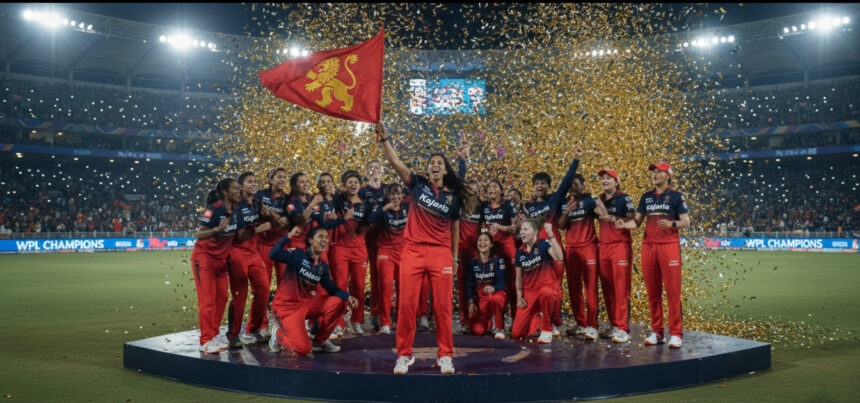
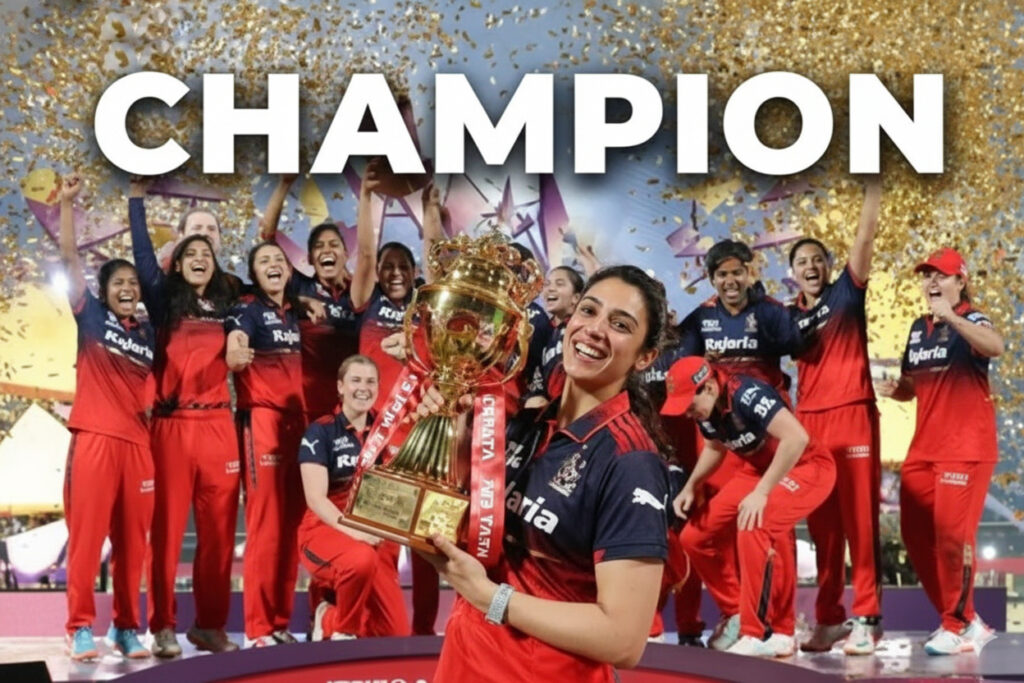
After Royal Challengers Bengaluru (RCB) won the WPL 2026 trophy, the news itself was a joy that the franchise is considered to be one of the most popular clubs in India. Soon after, there were fireworks, fan parties and social media trends. It would be a disservice to the Women’s Premier League 2026 to create a competition consisting of one successful team.
The fact is also straightforward but strong: WPL 2026 was the beginning of a new era in the history of women cricket in India, economics of sports, and gender in professional sports. This is not merely a sports headline to students who are training to take the UPSC, SSC, Banking and State PCS examination; but it is a sports current affairs topic, which has social, economic, and policy interests.
Similarly to IPL transforming the face of men in the sport of cricket, the WPL is transforming the face of India as a country to women in sports, professional sports leagues, and women in sport as a career.
Why WPL 2026 is a Better Idea than a Trophy Celebration
The fact of RCB winning the WPL final 2026 has significance, but the league itself has long-term meaning.

Women premier league has:
- Established a systematic professional face of the women cricketers.
- Lured individual investment and sponsorship.
- Greater international recognition of female Indian athletes.
- Invested in the Indian sports economy.
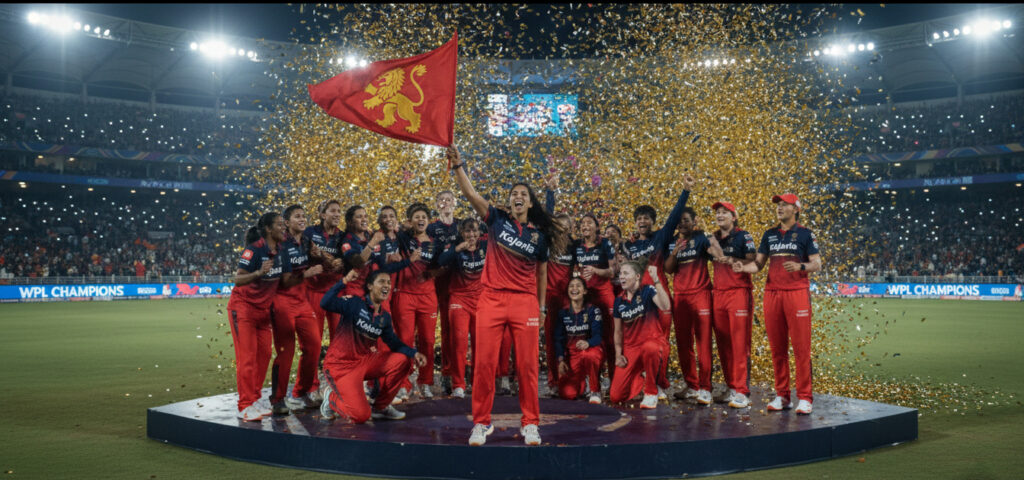
WPL 2026 would be a perfect fit in the answers concerning women empowerment by sports, franchise cricket India, and sports-led development models to exam aspirants.
A Short History: Vastly Overlooked to National Attention
In India, women playing cricket have lived in the shadows.
- Limited media coverage
- Lack of good remuneration relative to males.
- Few domestic opportunities
- No viable practitioner union.
With the introduction of the BCCI women league, this script was altered. Based on the IPL model, WPL added:
- Franchise ownership
- Auction based player selection.
- Central broadcasting deals
- Uniform player contracts.
By 2026, WPL grew to be a competitive tourism with commercial viability.

It is a victory for RCB: Not only Sporting
The WPL 2026 of RCB was more than just the performance in a match.
It represented:
- Team planning success over the long term.
- Female sports investment.
- Confidence of women in sports brands.
To Indian cricket enthusiasts, the victory was a way of calming down the notion that women’s victory in the leagues is just as important as that of men.

This perception change is among the greatest effects of WPL on Indian cricket.
A Case Study of Women Empowerment in Sports through WPL
In India, now women empowerment via sports is not a hypothetical concept.
WPL provides:
- Players Financial independence.
- International and domestic fame.
- Professional security after retirement.
A small-town player in Maharashtra told a PIB-selected interview about the fact that WPL income helped her support family and further educate herself. It is real empowerment, not slogans such as these.p’
The Sport Economy: Why WPL is an economic factor too
The sports economy in India is growing fast according to the insights that were volunteered by NITI Aayog.
WPL contributes by:
- Providing employment in the media, fitness, logistics, and event management.
- Boosting sports tourism
- Winning foreign investment.
- Gaining more advertising and on-line revenue.
This renders WPL an issue of concern to sports economy India and government survey up to date affairs in sports.
Franchise Cricket and Business Model of WPL
The franchise system is sustainable.
Key elements include:
- Central revenue sharing
- Salary caps
- Broadcast rights (long term).
- Brand-team partnerships
This system secures players as well as growth of leagues. It is why WPL will overcome initial scepticism and grow the audience by 2026.
Media, Visibility and Cultural Shift
Before WPL:
Cases when the matches of women were prime-time were not frequent.
After WPL:
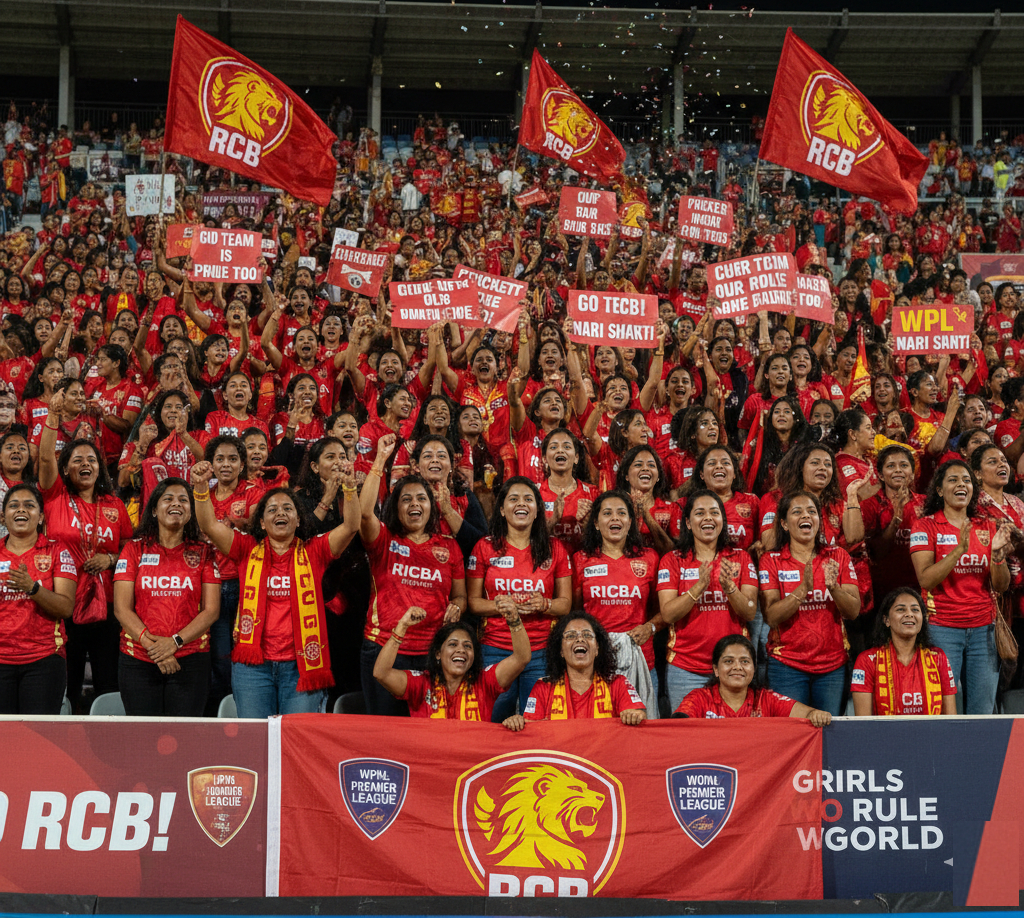
- Arenas were packed with women’s games.
- Normalizations on prime time.
- The level of social media interaction increased.
Sports current affairs India frequently speaks of this shift in culture as an occurrence of a transforming gender narrative.
Grassroots Inspiration and Rural India
Cities are not the only parts that feel the effect of WPL.
In rural districts:
- Cricket is a career option for girls.
- Women are enrolling in higher women academies.
- Sports are promoted in schools.
A WPL coach in a government school in Rajasthan explained that the visibility of WPL is what persuaded parents to permit girls to go to cricket camps. This is the same as the NEP reforms had on education attitudes – transforming the WPL into a social change tool.
How the WPL 2026 Changed the India Women Sports Viewing
WPL 2026 was instrumental in changing the perception of Indian people towards cricket by women. In the past, the women’s matches did not attract prime time. The league managed to show that the quality, competition, and visibility could go hand in hand, thus, the interest in the audience comes naturally.
Such change is significant in terms of sports current affairs India as it indicates a greater cultural change. Female sports are now no longer treated as a niche product but are being considered as a mainstream product with a commercial seriousness.
Key changes observed:
- Higher stadium attendance
- Greater television and online audience.
- Close interaction with fans on social media.
WPL as a Talent Pipeline of the Indian Women cricket
The establishment of a distinct talent pathway is one of the greatest results of the Women’s Premier League 2026. Young players also have a clear path to the national arena, which is through domestic cricket.
The reason behind this step-by-step approach is consistent with the recommendations over time in policy circles particularly on youth development and sports infrastructure.
Why this matters:
- Encourages young girls to be serious in cricket.
- Enhances domestic competitions.
- Enhances performance on an international scale.
Other Economic Effects The Economic Effect Off the Cricket Field
WPL 2026 had a positive contribution to the sports economy of India too. The league brought about job opportunities and revenue generated in various sectors and not only to players.
Regarding the government examination perspective, this demonstrates the way through which sports can serve as a multiplier in the economy.
Economic benefits include:
- Careers in broadcasting and media.
- Sports marketing and sponsorship growth.
- More need for coaches, trainers, and analysts.
The media and representation of women athletes in the media
The other obvious effect of WPL 2026 is change in the sports media coverage. The female cricketers are now addressed with the analytical sharpness as are their male counterparts.
This shift in the story promotes gender equality by making the success of women in competitive sports to be a normal thing.
Media shift highlights:
- More game commentary and analyst commentaries.
- Story of players and performance analysis.
- Broadcasting of female matches on prime time.
The Soft Power and the International Recognition of India.
Having overseas players in WPL 2026 enhanced the image of India as a women franchise cricket centre in the world. This foreign participation is a sign of trust in the sports administration and league organization of India.
WPL and Government Policy.
Although WPL is managed by BCCI, it does not go hand in hand with national objectives:
- Female involvement in the workforce.
- Skill development
- Youth engagement
- International soft power
That is why currently WPL is frequently referred to in the field of UPSC sports current affairs.
Outside of Cricket: The Role Model Effect
WPL athletes are now:
- Brand ambassadors
- Social influencers
- Motivational figures
This forms a vicious circle of success as participation breeds success.
The Issues that have not been Resolved.
Even though there is a success, there are obstacles:
- Pay gap with men’s leagues
- Poor domestic season duration.
- Weaknesses in infrastructure at the grassroots.
To understand these obstacles represents balanced analysis – which is crucial in answering examinations.
The Future of the Road: What a Future It Holds
According to experts following the Indian women cricket news, it can be suggested:
- Expansion of teams
- Longer seasons
- Stronger domestic pipeline
- International collaborations
Growth of WPL is likely to replicate the initial years of IPL.
More Read

Final Takeaways
The victory of RCB was historic, and that of WPL is structural.
- WPL aids in empowering women using sports.
- It enhances the sports economy of India.
- It transforms the attitudes of the society.
WPL 2026 shows that sports may be transformed into a driver of nation change when there is an alignment between policy, business and talent.
Frequently Asked Questions (FAQs)
What is WPL?
WPL denotes Women premier league, a professional women cricket league in India which is being arranged by the BCCI.
Who won the WPL 2026 trophy?
Royal Challengers Bengaluru (RCB) was the winner of WPL 2026 trophy.
What is the support of WPL in empowering women in India?
WPL offers cricketers women with:
- Regular income
- National and international awareness.
- Career stability
- Equal opportunities in sporting activities.
Who is the organizer of the Women Premier league?
The women’s premier league is under the control of cricket in India (BCCI).
What is the contribution of WPL to the sports economy of India?
WPL earns money in the form of:
- Sponsorships
- Broadcasting rights
- Franchise investments
- Employment in the sporting linked industries.
What kind of franchise model is employed in WPL?
Under the franchise model:
- Teams are privately owned
- The selection of players is done by auctioning.
- Revenue is shared centrally
- This model guarantees sustainability.
What is the difference between WPL and other previous women’s tournaments of cricket?
WPL provides unlike previous tournaments:
- Higher salaries
- Fixed seasons
- Strong media coverage
- Professional management
What does WPL do to motivate the rural and young girls?
WPL visibility encourages:
- Father and mother in favour of sport.
- Girls-only schools to enhance cricket.
- Increased attendance to sports academies.