

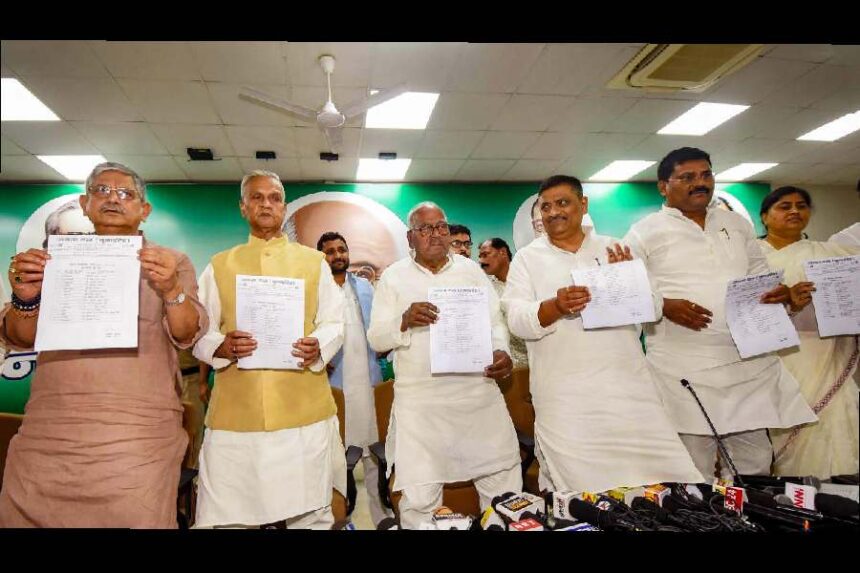
On October 16, 2025, the Janata Dal United (JDU), led by Chief Minister Nitish Kumar, released its second and final list of 44 candidates for the upcoming Bihar Assembly elections. This announcement completes the party’s candidate roster for all 101 seats allotted to it under the National Democratic Alliance (NDA) seat-sharing agreement.
The timing and content of the list have sparked discussions and controversies—especially over a few constituencies claimed by alliance partners, the caste and religious balance in its roster, and the political signaling it sends to rivals and voters alike. This article delves into the context, the list’s features, reactions across parties, and what this means for Bihar’s electoral battlefield.
Political & Electoral Context
The 2025 Bihar Assembly Elections
-
The Bihar Legislative Assembly elections 2025 are scheduled in two phases: November 6 and November 11, with counting to follow on November 14.The assembly has 243 seats in total. Under the NDA alliance, JDU, BJP, and LJP (Ram Vilas) are contesting parts of the seat-sharing arrangement.
-
As per reports, the arrangement gives JDU and BJP each 101 seats, while LJP (Ram Vilas) is allocated 29 seats.
The announcement of JDU’s final list comes amid tensions and negotiation pressures within the NDA over seat allocations. Some alliance partners had expressed dissatisfaction or claimed that their allocated seats were being encroached upon.
Key Features & Highlights of the 44-Candidate List
Completion of Slate & Roster Strategy
-
With the release of these 44 further names, JDU completes its full 101 candidates allowed by the seat-sharing pact.
-
The second list includes a mix of sitting ministers, new faces, turncoat entrants, and representatives from different social categories, aiming to balance experience, loyalty, and representation.
Ministers & High-Profile Candidates
Some names already in the public eye featured among the 44:
-
Leshi Singh (incumbent minister) was re-nominated from Dhamdaha. Jayant Raj was fielded from Amarpur.
-
Sumit Kumar Singh (a former independent winner) was given a ticket from Chakai.
-
Jama Khan from Chainpur and Bulo Mandal from Gopalpur also made the cut.
-
Several turncoats: Chetan Anand, formerly with RJD, is fielded from Nabinagar.
-
Vibha Devi, who left RJD for JDU, was also nominated from Nawada.
Social & Community Representation
-
The roster reportedly includes 4 Muslim candidates in the second list.
-
Caste composition metrics cited: out of the final list and across both lists, the party has a large share of OBC, EBC, SC, and general category candidates. For this second list, reports mention 37 OBC, 22 EBC, 15 SC, and 1 ST candidate.
-
Only a handful of Muslim candidates signals careful balancing but also possibly a limitation in outreach to Muslim voters in some constituencies.
Constituency Conflicts & Seat Claims
One of the more controversial parts is about which constituencies JDU chose to field candidates in, especially those claimed by alliance partners:
-
The party’s first list had already included four seats sought by Chirag Paswan’s LJP (RV), which increased friction in the alliance.
-
Rajgir, in Nalanda district (a home turf for Nitish Kumar), is especially contested, and JDU’s decision to field a candidate there is seen as a bold signal.
-
Gopalpur’s ticket was cancelled in earlier consideration but resurfaced in discussions.
Political Reactions & Internal Alliance Tensions
Within the NDA
-
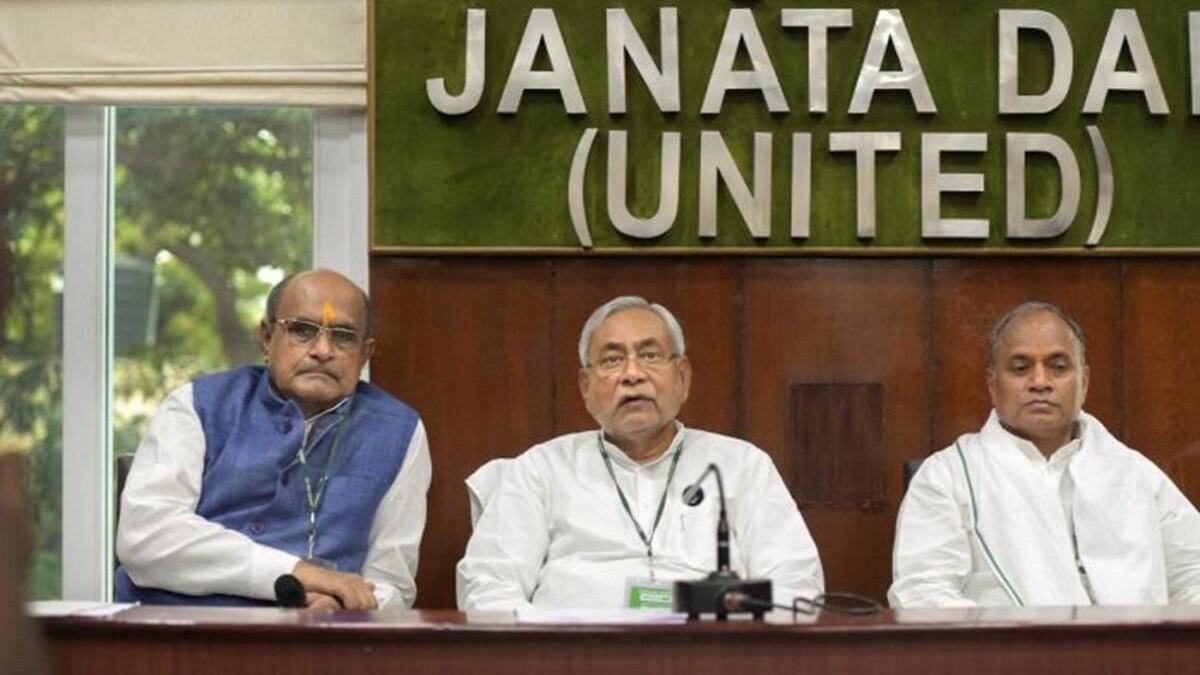
The alliance arrangement has drawn internal criticism. Some NDA partners, notably LJP (RV) and others, had voiced discontent at perceived overreach by JDU.
-
JDU leaders have defended their strategy, saying they had to ensure winnable candidates and assert their strength in certain constituencies.
-
BJP, having already released many of its own candidate lists, sees competition but is keen to maintain alliance unity. The BJP’s multiple list releases (first list, subsequent lists, filling up its 101 seats) have added pressure to finalize seat allocations across NDA.
Opposition & Rival Parties
-
Opposition parties have criticized JDU for overreaching, especially where alliance partners expected tickets. Some have accused JDU of unilateralism.
-
RJD and Congress blocs might use this to underscore alliance discord within NDA and to push their narrative of coalition fairness.
-
Smaller parties and independent aspirants may benefit if voters see cracks in the ruling alliance’s unity.
Media & Public Reactions
-
Media outlets have highlighted the caste, religious and gender breakdown of JDU’s lists, noting both inclusions and omissions.
-
The late completion of the list has also been pointed to as indicative of last-minute bargaining and uncertainty.
-
Analysts see the list as a political message: JDU wants to project strength, control and autonomy even while in alliance.
Electoral Implications & Strategy
Signaling & Messaging
-
Releasing a full list early allows JDU to begin campaign work in all allocated constituencies rather than waiting for last-minute decisions.
-
By retaining strong incumbents and re-nominating ministers, the party seeks continuity and leveraging incumbency advantage.
-
Fielding new faces and turncoats helps broaden appeal and manage intra-party aspirations.
Risk & Reward
Risks:
-
Alienating alliance partners if they feel squeezed out or betrayed in seat allocations.
-
Vote split risk if local elites or factions within NDA contest independently.
-
Backlash from communities or sections (religious/caste) if they feel underrepresented.
Rewards:
-
Consolidated campaign in all 101 seats, avoiding gaps in territories.
-
ability to counter opposition’s narratives of NDA disunity.
-
Potential to exploit alliance partners’ dissatisfaction as leverage later.
Role of Local Factors
In a state like Bihar, local caste dynamics, candidate reputation, development record, and ground mobilization matter heavily. Even a well-crafted list can be undermined by weak local machinery. JDU’s list seems to try to account for that balance by retaining or placing known local faces.
Moreover, phases and polling logistics will put pressure on coordination. The early unveiling gives them time to map out campaign strategy for both phases.
Challenges & Critiques
Representation Criticism
-
While the inclusion of 4 Muslim candidates in the second list is seen as positive by some, critics argue the representation is still minimal relative to the Muslim population in Bihar.
-
Some argue that women’s representation remains low and that many constituencies lack women candidates. Media has flagged this disparity.
Allegations of Opportunism & Defections
-
Fielding turncoat or defected candidates often draws accusations of opportunism. Allegations of transactional politics may hurt image among idealist voters.
-
The shifting of sitting MLAs or local strongmen across constituencies can sometimes be perceived as weak internal discipline.
Seat-Sharing Tension Backlash
-
If alliance partners feel shortchanged, there is a risk of ego clashes or non-cooperation during campaigns.
-
A contested seat or overlapping claims may lead to confusion among ground workers and voters.
What to Watch Now
-
Nomination filings: Candidates will file or withdraw nominations by October 20; alliance corrections or seat swaps may still emerge.
-
Alliance responses: LJP (RV) and others may push back or demand renegotiation of contested constituencies.
-
Public & media scrutiny: Local media in constituencies will highlight candidate acceptability, caste alignments, and any anomalies.
-
Campaign rollout: How soon JDU organizes rallies, deploys resources, and counters opposition challengers in its 101 seats.
-
Opposition strategies: RJD, Congress, and others may form counter-alliances or try to split NDA votes using local grievances.
Larger Significance & Takeaways
-
The finalization of candidate lists is not just administrative — it is political messaging. JDU wants to indicate it is set, confident, and in control across the 101 seats.
-
This move also tests the stability and cohesion of the NDA in Bihar, revealing how much balance or strain exists in alliances.
-
The composition of the list—by caste, community, incumbents vs new faces—signals JDU’s priorities and risk assessment in each constituency.
-
With the list out, campaign season truly begins: ground mobilization, resource allocation, media outreach, and voter persuasion will determine how well JDU converts this list into electoral advantage.