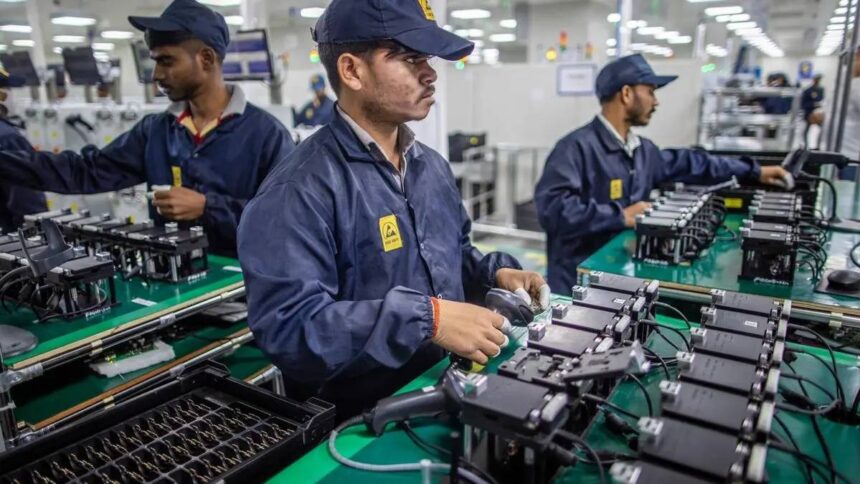
India has made one of its most definitive moves so far in being an international manufacturing giant. The fact that the government has given a nod in investments of 4.6 billion in electronics manufacturing is a turning point to the Indian industrial policy implying with a great deal of focus that they intend to reduce their dependency on imports, to create high-value employment, and to make India a dependable alternative to its current position on the global electronics map.
It is not a step of factories or of financial support. It deals with long term economic sustainability, technological independence and the desire of India to be at the heart of global electronic and semiconductor supply chains. The decision made by India has both economic and strategic implications at a time when the world is being transformed by geopolitical tensions, supply shocks, and technological nationalism.
Of particular importance regarding this announcement is their timing. The electronics demand of India is increasing at an extremely high rate as a result of the infiltration of smart phones, E-vehicles, electric energy infrastructures and the development of digital infrastructure. Simultaneously, multinational organizations are also seeking to diversify sources of manufacture. This is exactly where the domestic demand meets the global opportunity as the approval of the four point six billion dollars.
The reasons why Electronics Manufacturing is now a National Priority to India
India was the main consumer of electronics and not a producer in the span of decades. There was a high importation of smartphones, semiconductors, laptops and industrial electronics which has resulted in an increasing trade deficit. This reliance was especially evident throughout world supply based issues, as the shortage of supply occurred in all forms of mobile phones up to automotive manufacturing.

By identifying such weak points, the government slowly brought electronics manufacturing to a strategic level. The policies in the Make in India electronics initiative sought to revert this trend by promoting local manufacturing, foreign direct investments and developing a local supplier ecosystem.
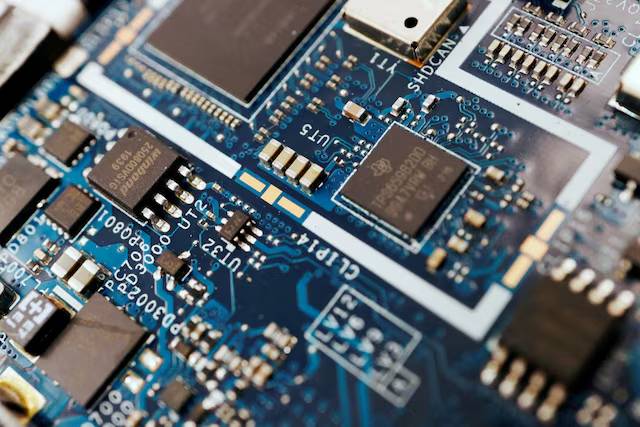
Electronics production is not another industrial sector. It is flexible intertwined with national security, computer infrastructure, job creation, and innovation capability. The defense systems, telecom network, medical devices, and emerging technologies, such as artificial intelligence and electric mobility, have strong support that helps on the electronics base.
The granting of new projects worth 4.6 billion dollars suggests that the government feels that India is now in a position to cease production that is characterized by assembly and adopt value addition electronics production.
A short examination of the electronic manufacturing journey of India
The electronics manufacturing story of India did not start off in a flash. At the beginning of 2000s, the domestic production was few, fragmented, and could not compete with East Asian economies. The cost and poor infrastructure and policy destruction did not encourage mass investment.

Policy interventions became the critical point in the middle of the 2010s. They were momentum production based incentives, increased ease of doing business and infrastructure development. The manufacturing of mobile phones was one of the first success stories with India becoming one of the largest smartphone assembly centres in the world in a couple of years.
Indian government statistics released in government press releases indicate that over the past ten years the manufacture of electronics in India has increased severally. There are an increased number of exports and the presence of global brands in the Indian states.
Policymakers however discovered that it was not sufficient to assemble. Components, semiconductors, and progressive manufacturing, that the new investment push to the tune of $4.6 billion is indispensable, is where the real value resides.

What the $4.6 billion Investment Approval You Are Talking About Covers
The investments that are approved cut across various segments in the electronics manufacturing industry in India. The government has not concentrated on any category but has diversified to enhance the whole value chain.
Key focus areas include:
- Semiconductor factories and fabrication plants.
- Board of circuit-breakers including chips, sensors and printed circuit boards.
- Manufacturing divisions of consumer electronics.
- Manufacture of industrial and automotive electronics.
- Next-generation technologies research and development centers.
This decentralized placement position will make sure that India will not be reliant on imported parts even when the finished product may be produced locally. It, also, facilitates the process of building of small and medium suppliers that constitute the foundation of any decent manufacturing ecosystem.
The Power of this Decision in the Make in India Electronics Vision
Make in India electronics, always on the one hand, was managed as more than mere branding. The main aim it had was to make India a competitive destination in global manufacturing. This vision is perfectly reflected in the 4.6 billion approval since it will roll out three nagging issues.
First, it reduces the entry barrier of international manufacturers by providing clarity in policies and long-term commitment. Second, it enhances the capacity of countries where it operates by strengthening local companies and talents. Third, it creates a perception of confidence of the global markets that India is intent on further growth in electronics manufacturing.

The government itself is promoting the transfer of technologies and the development of skills and innovation by granting major investments. Such spill over effects can be even more beneficial than the value of investment.
Semiconductor Manufacturing: The Thrust of the Investment
Perhaps one of the most examined parts of the announcement is the focus on India semiconductor and electronics projects. India has in the past been virtually dependent on imports of semiconductors which are the parent industry of modern electronics.
The recent global shortages of chips demonstrated the dangers of such a dependence. This slowed down production in industries as far as automobiles, to consumer electronics because of the limited access to chips.
India is also intending to establish strategic independence in an industry that has a direct effect on economic and national security by financing semiconductor manufacturing and packaging. It is by no means fast to realize a complete semiconductor ecosystem, but the existing investments form an essential base.
This is viewed by government planners as a long-term game whose benefits would come after decades as opposed to years.
Real-Life Impact: The Ways the Manufacturing Policies Reach Everyday Lives
To realise what human aspect is present in this investment, look at the case of a semirural district in Tamil Nadu, a diploma holder by the name Ramesh. His working prospects had been restricted to low wage contract jobs over the years. Upon the introduction of an electronics manufacturing unit through government incentive programs, he was introduced to quality control and is currently a fulltime technician.
Such stories act as an example of how the growth of electronic manufacturing in India is translating to steady jobs, capability building and development of the region. Clusters in manufacturing usually result in enhanced infrastructure, education and local entrepreneurship.
Such outcomes are likely to be repeated in different states as a result of the $4.6 billion approval.
The support of Government Policy and Institutional Support
Policy consistency and institutional support are very critical in the success of electronics manufacturing. The government electronics investment in India over the years has been driven through elaborated policy frameworks that have been meant to cut costs, enhance logistics and ease approvals.
The statistics published in official policy reports show that turnaround time improvements, power supply, and computerized governance have been enhanced. Such reforms have seen India become more competitive than the traditional manufacturing centres.

Strategic evaluations conducted by NITI Aayog have recurrently underlined the electronics business as a sunrise industry which can produce high value employment and exports. The present investment approval indicates a congruence of the policy planning and implementation.
The reason why Global Companies are now paying attention to India
Electronics companies around the world are reconsidering supply chains as costs increase, geopolitics become more threatening, and the needs of the diversity of demands. Few countries can match the scale, talent and policy support that India has.
The fact that India has had its approval of $4.6 billion sends a strong message that India is ready to have long term partnership and not a short term assembly contract. It also gives the investors assurance that the government is ready to share risks at the initial stages of manufacturing ecosystem development.
This trust confidence would lead to more investments many times over and above the original agreed investment.
Difficulties That are yet to be solved
The positive momentum notwithstanding, there are some challenges. The production of electronic items demands constant electricity, effective logistics, and the labor force. Although there are some positive changes, there is still variation in regions.
The other issue is technological change rate. The electronics manufacturing requires constant improvement of the skills and procedures. Even in the absence of long-term investment in training and research, the competitiveness may disappear very fast.
These issues do not go unnoticed by the policymakers, and this is why numerous approved projects have the considerations of skill development and technology partnerships.
The Effect of this Investment to the Global Trade of India
Electronics is also one of the booming areas of international trade. India has in a position to boost its export portfolio by enhancing domestic production. The dependence on imports is also decreased and this contributes to stabilizing the balance of trade.
The manufacturing of electronics in India is slowly getting considered as export-based as opposed to being an exclusively local enterprise. The Indian-made electronics can compete in the global markets with the right quality standards and scale.
This 4.6 billion approval hastens this import substitution to export leadership.
Prospective: Where the Electronics Industry in India is going
In the future, analysts reckon that the electronics manufacturing industry in India may be going into expansionary mode. The further development of the policy, along with the increase of domestic demand, forms the healthy environment of growth.
The rising technologies like electric cars, renewable energy solutions, and intelligent infrastructure will also increase the electronics component demand. The success of Indian industries in the next decade will be determined by its capacity to satisfy this demand within the country.

The present investment approval can be regarded as a point of departure and not a destination.
Lessons to Students, Professionals, and Entrepreneurs out of this Move
To the students, the development of electronics manufacturing provides them with a new job opportunity in the fields of engineering, quality control, supply chain management, and research. Electronics and semiconductor production related skills are also probably in high demand.
Individuals can improve with the enhancement of automation, data inspection, and sophisticated manufacturing technologies. The industry compensates on-going education.
Opportunities that can be exploited by the entrepreneurs include the manufacture of components, logistics, testing services and other sidesteps that serve the large manufacturing plants.
More Read

Why This Case is Important More Than Headlines
When India gave its green light to invest 4.6billion dollars in the manufacture of electronics, it is beyond a mere policy statement. It embodies a long-term change of strategy to industrial self-reliance and world competitiveness.
The move enhances the vision of electronics in Make in India, assists in developing semiconductor, provides jobs, and makes India a viable manufacturing option in the shifting global order.
When executed well, this action may transform the place of India in the world electronics value chain over the decades.