The ecological stress proved not to be the domain of satellite images, scholarly publications, or forestry remoteness any longer in India. It is manifesting in flooding cities, dry taps, heatwaves that are coming earlier in the year and air that is habitually exceeding limit. The ecological sources supporting the Indian economy and people in general are at risk throughout the boundary of the ancient Aravalli range in the west to the immense river systems of the nation.
This is not the treatment of isolated failures. It is concerned with how land, water, forests, and urban development are interacting with each other in a manner of which the policy has yet to keep up with. Mining and the construction of buildings are tearing apart the Aravallis, one of the oldest mountain systems in the world. Rivers are becoming seasonal, polluted or diverted to levels irreversible. Wetlands which are supposed to absorb floods are going away beneath real estate and infrastructure.
The only difference this moment has is scale and speed. The information provided by the government agencies, research centers and international climate evaluations all indicate degradation that is at an increasing rate at the same time India is growing in development requirements. Whether environmental protection can exist hand in hand with growth is no longer a question, but the question is whether growth can exist without more rigorous ecological regulation.
This paper places a deep analytical exploration of the reasons why India needs immediate policy narration at the moment, how we got here, what is occurring on the ground, and what must be monitored next by policy-makers and citizens.


Knowing the Ecological Backbone of India
The ecology of India is based on some interdependent systems. In case one becomes weak, the impacts are spread among others.
The Aravalli Range: A Natural Shield in a Stress
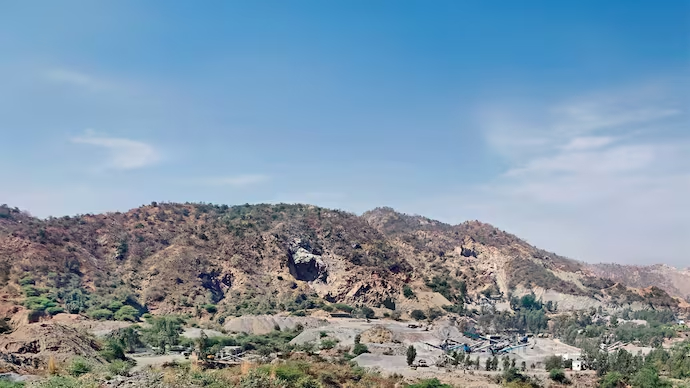
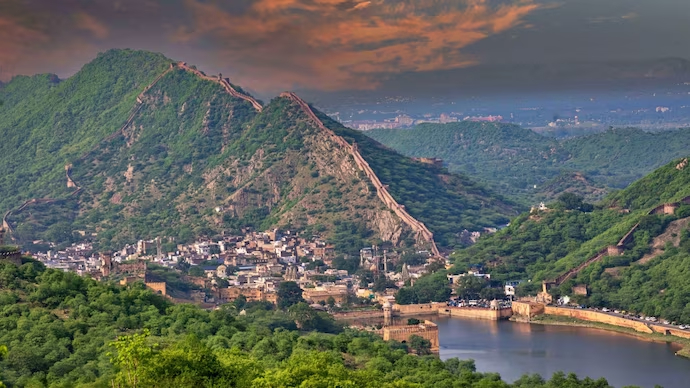
The Aravallis are the obstacles that extend approximately 700 kilometres between Gujarat and Delhi.
An obstacle to desertification of the Thar.
A groundwater catchment to the north-west India.
Connecting forest patches with a biodiversity corridor.

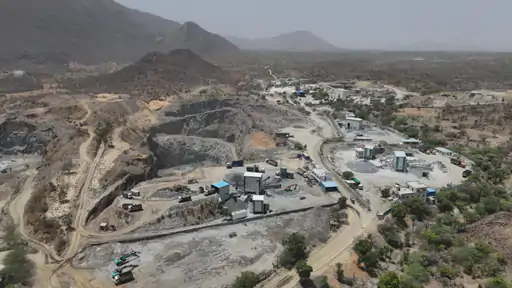
Prolonged mining without controls, development around the Delhi NCR, and other infrastructure activities have broken up this system. Satellite-based studies indicate that there is a high extent of forest cover and hill integrity loss which is slowing down the desert winds and water retention capacity of the range.
Rivers: Beyond Running Water
The rivers of India are not merely sources of water; but they are multifaceted ecological systems, which feed the agriculture, fisheries, industry as well as cultural life. Yet most, most many Rivers now known:
- This causes decreased base flows because of over-extraction.
- The sewage and industrial effluents are untreated and cause high pollution loads.
- Natural courses are changed due to dams and embankments.
The level of various large rivers varies to appear more as the flood and the scarcity and not as a normal variation.

Wetlands, Forest, and Aquifers
As meant to be ignored, these processes control climate effects:
- Wetlands take up flooding water and eliminate contaminants.
- Forests stabilize the rainfall and the soil.
- The aquifers serve as reserves during droughts.
Over the past few decades India has lost much of its wetlands, and the rate at which ground water is pumped out in most of the areas is way higher than the speed at which it is replenished.
The way Policy and Practice Lost Touch
Indian environmental protection is not a new concept. There have been laws that govern forests, wildlife, water, and pollution which are decades old. The issue is in fragmentation and implementation.
Sectoral Silos
Skilled environmental decisions are usually made silo:
- City planning is concerned with transportation and residential dwellings.
- The mining policy focuses on resource mining.
- The water management divides rivers and the ground water.
This method does not recognize the functioning of eco-systems as systemic units. The example is that it is difficult to have a lasting long term benefit with protection of a stretch of river without the protection of the catchment.
Feeble Enforcement and Duplication of Jurisdictions
There are various agencies that are in charge of land, water and forests. This leads to:
- Delays in accountability
- Conflicting approvals
- State and local regulatory fatigue.
Environmental impact assessments which should be used as preventive tools have been used to be merely check boxes and not as a strict evaluation.
Expansion Without Environmental Bookkeeping
Even giant infrastructure and industrial undertakings hardly ever take into consideration the ecological cost over the long run in a quantifiable manner. Lack of thorough accounting of natural capital indicators implies that the deprivation of the environment does not exist in the numbers of economic decisions.
What the Data Is Telling Us
Numbers fail to measure everything, but they represent too big to overlook patterns.
Water Stress Not Seasonable but Structural
Numerous measurements suggest that portions of the Indian districts are characterized by a high and extreme water stress. This is driven by:
- Excessive reliance on ground water as a source of irrigation.
- Planning of supply under the influence of urban demand.
- Despoliation diminishes the fresh water availability.
Mixed results are the outcomes of river rejuvenation programmes when the upstream extraction and the land-use alterations are not discussed simultaneously.
Degradation of Land is On the Rise
Land degradation has impacts on agricultural productivity, food security and even rural livelihood. Monitoring by satellite indicates that there are increasing regions of degraded land because of:
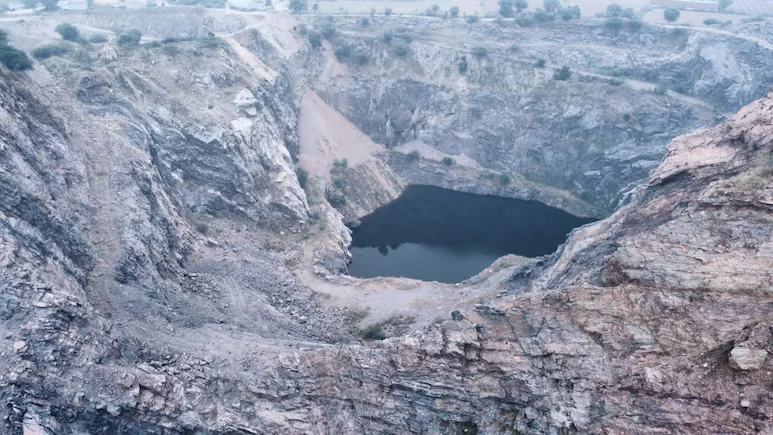
- Mining and quarrying
- Poor agricultural activities.
- Unplanned urban sprawl
The Aravalli area is one of the exemplary cases in which the surrogate effects of land-use change can be demonstrated regarding air quality and water supply in the adversarial cities.
Weaknesses Formerly Present Are Being Increased by Climate Signals
Increase in temperature and fluctuating rainfall affects pre-existing ecological stress. Heatwaves heighten the demand of the water whereas angry rainforests are unable to absorb surplus amounts of water because of poor landscapes.
Most Recent Tendencies to reform the Ecology of India
There are a number of changes that are transforming the environmental environment both positively and negatively.
Rapid Urban Expansion
The cities of India are growing at a rate that is higher than their ecological systems. Wetlands are being filled, green buffers are being reduced and natural drainage channels were constructed over them. This exposes the cities to floods and heat stress.
Infrastructure Push
The key aspects of economic plans are transport corridors, energy projects, and industrial areas. In the absence of ecological planning, such projects are likely to disintegrate habitats and permanently change the course of water streams.
Growing Public Awareness
Meanwhile environmental problems are starting to become the focus of the general discussion. Ecology has become a reality and not an abstract issue due to air pollution, scarcity of water and extreme weather.
The Beyond the Environment Importance of this
Ecological degradation does not simply have environmental effects, it has social, economic and political impacts.
Public Health Impacts
Water and air pollution are among the contributors to disease burdens which put pressure on healthcare systems. Heat stress influences productivity particularly to outdoor employees.
Economic Risks
The manufacturing, agriculture as well as energy all rely on natural systems that are stable. Breaking rivers and destroying land raise expenses and lower the long-term feasibility.
Social Inequality
Small farmers, urban poor, and forest-dependent people are the vulnerable groups that are disproportionately impacted by environmental stress and increase the disparities that already exist.
Some of the Myths that Muddle the Discussion
Development and Ecology Are Opposites
This framing is misleading. Evidence is growing that ecological limits are compromising the consequences of development. Growth and development in the long term require the robustness of natural systems of the planet.
“Technology Alone Will Fix It”
Ecosystems cannot be substituted by technology. There are limits and frequently high prices in the desalination, water transfers and geoengineering.
Local Issues Do Not Require National Policy
Administrative boundaries are crossed by ecological systems. Such things as river basins, mountain ranges, and aquifers demand inter-district or inter-state policy.
What Could a Better Policy Action Be Like?
Immediacy is not the same as foregoing development objectives. It is a matter of making them more in touch with ecological realities.
Intensified Planning Integrated Landscape and River Basin Planning.
The policies should shift towards approving projects on a case-by case basis towards planning at a landscape level taking into consideration the cumulative effects.
Natural Capital Accounting
Economic quantification of ecosystems can be used in the future to make better decisions and explicitly point out trade-offs.
Strengthening Institutions
Environmental governance can be made simpler, through clearer mandates, enhanced data sharing, and independent oversight to ensure that the additional complexity is not introduced.
Local Participation
Societies tend to be most directly concerned with ecological performance. By empowering local institutions, compliance and innovation is enhanced.
What to Watch Next
The following signals will be used to show, whether the ecological policy of India changes in a meaningful way:
- Implementation of basin watershed water management systems.
- Greater protection of environmentally sensitive areas.
- Climate risk should be incorporated in the physical planning.
- Better environmental clearances.
The way these factors will change in the coming years will not only define the environmental performance, but also the economic strength and stability in the community.
Summary: Why This Moment Needs Attention
The ecological challenges in India are interdependent, factual and more apparent. Since the declining Aravallis are evidence of the straining system, the rivers are, as well, and it is a system that cannot be solved by incremental solutions.
The current situation necessitates an urgent policy to be adopted without having to make a choice between growth and ecology. It involves the appreciation of the fact that the two can not be separated. The actions that are taken now, regarding land, water and governance, will remain as to whether the future of development in India will be sustainable in an alternate climate.
More Read

Frequently Asked Questions
Why does the ecology in India have increased pressure?
Increased population, urbanisation and growth in consumption have put more pressure on land and water. Meanwhile, climate variability is increasing the exerted stress. A combination of these forces is driving ecosystems to levels that they could not previously withstand.
What is the impact of ecological degradation in daily life?
It manifests itself in water scarcity, flooding, air environmental degradation, and increased food prices. Such effects also have influences on health, productivity and household expenditures and thus ecology is not a faraway issue but one of our day to day lives.
Do existing environmental regulations fail to work?
There are numerous laws in place and little enforcement and co-ordination. The problem is not the lack of regulation but rather decentralized administration and the lack of capacity to enforce them.
Is it possible to keep growing economically and maintain the ecosystems?
Yes, but under the condition of the ecological boundaries taken into consideration by growth planning. Sustainable economic stability requires long-term operating natural systems in which agriculture, industry, and urban existence depend.
What is the realistically significant role of citizens?
The policy priorities are affected by public awareness. The citizens can enhance better governance by taking part in the local planning, insisting on transparency, and appreciating the fact that environmental protection is not about the niche.