As December 2025 progresses and the winter is coming but it is not really the winter of our childhood. The people throughout India are bewildered, anxious, and even dismayed at the way this season has become. Whether it is oddly warm afternoons then scarily cold fits at night the winter of this year is passing as having two antagonistic personalities. It was no different this year in every corner of the country–North, Central, East, South and even the Northeast–but the message has been reported everywhere and every place: Winter is different this year.
The same is the reality is being faced by weather experts, climate researchers, farmers, school children, office-goers, and everyday citizens. The weather is no longer predictable. It is not the winter of the last ten years but is a climate-changed winter, one with changes in temperatures, heat islands in urban areas, warm ocean currents, the impact of El Nino, and artificial environmental strain.
It is a deep report that decodes it all, as to why winter is atypical in 2025, why the temperature is increasing despite seasons, why severe cold waves occur unexpectedly, what the IMD and PIB data show, how the population of India is getting impacted and what it implies to future seasons.
Why winter 2025 will be so different across India
The Indians, over decades have come to claim the association of winter to foggy morning, cold winds that are gentle, late sunrise, sweaters, and warm meals. But 2025 has impressed this memory. The season is now capricious, with weeks of early summer and weeks of cold in the middle of January.

Essentially weather scientists mention three major causes of such bizarre patterns:
- Shifting Jet Streams
- Latent Western Disturbances.
- Climate change and its associated temperature abnormalities.
Yet it is not only scientific terms which make the situation more complicated. I want to break it down so that every Indian can relate to it.
In most of the states, the minimum temperature has been high, 3-5degC above the usual standard, in early December and in late January. The cities such as Delhi, Jaipur, Lucknow, Pune, and Hyderabad had recorded abnormally warm afternoons with 26-28degC being recorded in high winter season.
Meanwhile, the sharp cold waves struck in areas like Haryana, Punjab, Uttarakhand and areas of Rajasthan where temperatures dropped abruptly at one point to near 2-4degC in a range of 24-48 hours.

This juxtaposition is enough proof of the fact that the season has become volatile and unstable.
The Science of Waltzing Tempo in Winter
Although winter typically relieves of heat, the winter of 2025 is experiencing one of the most intense temperature upsurge in recent years.
Warmer Ocean Temperatures
The Arabian Sea and the Bay of Bengal are warmer now than ever. Warmer seas cause more moisture to be released disturbing atmospheric balance and warding off normal cooling of winter.

Urban Heat Islands
Such cities as Delhi, Mumbai, Bengaluru and Ahmedabad are heat trapping, due to high-density construction, traffic pollution and greenery deficiency. This accumulated heat is emitted at night increasing the minimum temperatures.
Late Coming of Cold Air in the Himalayas
In early December, cold winds on the Himalayas usually blow across northern India. This year, the trend was broken by lower northwesterly winds.
Global Climate Change
There are several climate reports indicating that India is the country cooling more rapidly than the world average. This affects winters most, as they are shorter, warmer and unpredictable.
El Nino Effects
El Nino period causes warm winters in India. The El Nino impact has been pronounced this year and the entire months of November and December have been experiencing high temperatures.
Why? There are still sudden cold waves in the face of increasing heat
Why, then, do cold waves strike so suddenly, should the winter be so warm?
The solution is easy: the instability of the temperature. As warm air continues to prevail but is taken over by cold Blows of Himalayas suddenly, the collision will lead to:
- sudden temperature drops
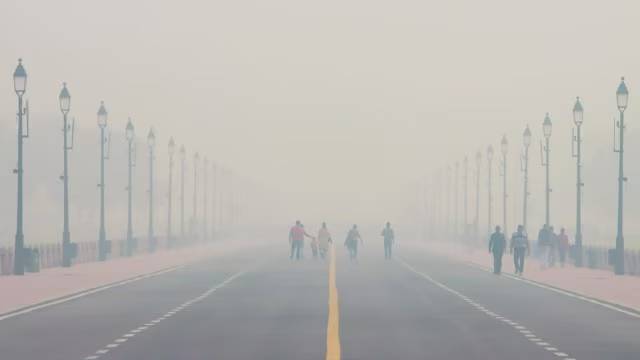
- dense fog
- ground frost
- chilly nights
That is why such cities as Delhi or Chandigarh may experience a difference of 10degC in two days.
These are powerful but shallow waves of cold quickly interacting making winter seem erratic.
The States in India that were the most impacted by this weird winter
Northern India
- Delhi registered the best early winter in more than ten years.
- Sudden cold waves were experienced in Punjab and Haryana in mid January.
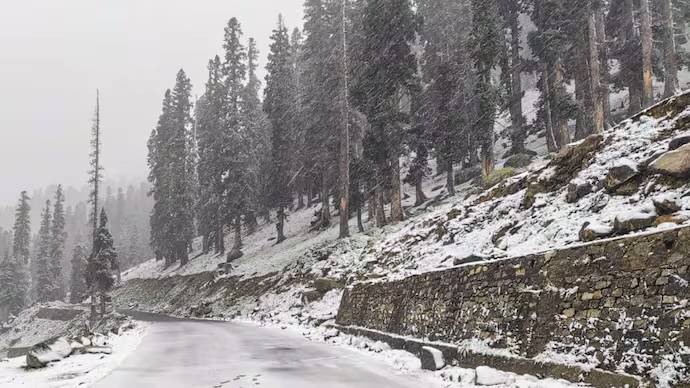
- Himachal Pradesh had low amounts of snowfall, which influenced tourism.
Western India
- There were enormous varieties in Rajasthan: both hot and cold days.
- Gujarat covered excessive temperatures.

Eastern India
- West Bengal and Odisha had postponed the winter.
- The length of fog conditions was longer in Bihar and Jharkhand.
Southern India
- Normal night temperatures were found to be above average in Tamil Nadu and Kerala.
- Bengaluru observed that there was a strange lack of chill of winter.
Central India
- Short bursts of intense cold and warm periods were observed in Madhya Pradesh.
- In Chhattisgarh the winter was like early summer in the afternoon.
Real Life Sights: India Living in Winter without the same winter 2025
Winter shift is not merely a climate story, it impact the everyday life in actual sense.
School Students in Delhi
Riya, a 15 year old student in Rohini, also told us about the bewilderment it has caused:
Some days I put on a light jacket and I am sweating in the afternoon. The following day it comes as cold, and we cannot even sit in the classroom without heaters.
This disparity puts health under strain especially among children.
Farmers in Punjab
Gurmeet Singh is one of the wheat farmers of Ludhiana who said:
“Wheat needs a stable winter. But warm days and cold sporadics are influencing germination. It is clear, we are not sure how the crop will go.
India is agricultural and the yield is threatened by winter inconsistency.
Office Workers in Bengaluru
Raj, an IT worker at Electronic City reports:
Usually in January mornings it is cold here. This year, however, I will be going to work in regular shirts. There is no real winter.”
Lifestyle and health pattern is influenced by winter missing in Bengaluru.
Tourist Guide in Shimla
A local guide shared:
“Snowfall was delayed. Tourists were disappointed. It was less than usual even when snow came.
The climate change contributes to massive losses in tourism.
Data of government and PIB/NITI Aayog Insights
Shorter Winters in India
According to latest climatic reports, it has been noted:
- Owing to global warming caused by global warming, the winter season in India has been shortened by about 2-3 weeks over the past 10 years.
- Lowest temperatures in winter have risen 1.5degC in average global temperatures.
Winter is Warmer because of Air Pollution
With high pollution, the heat is trapped at the ground level. The cities such as Delhi and Kanpur are prone to heat retention, particularly, in winter nights.
Fog Events Increasing
Mog has been on the rise particularly in the Indo-Gangetic plains even though the temperatures are rising. The reason behind this is that warm air is more moist.
Rainfall Patterns Changing
The unseasonal rain occurred in Maharashtra, U.P and some areas of Karnataka, impacting on crops such as wheat, mustard and pulses.
Such trends point to the changes towards unpredictable and drastic climate conduct.
The Health Effects of an Unpredictable Winter
Such a winter is more than any unusual winter–it is unhealthy.
Rise in Seasonal Illness
Repeated changes of temperatures enhance incidences of:
- colds
- cough
- fever
- respiratory infections
- viral outbreaks
Higher Pollution Exposure
Smog is aggravated by warm winter days since the pollutants are not washed away.
Sleep Cycle Disturbance
The irregular weather conditions affect the body rhythm and sleep patterns become unreliable.
Mental Stress
Climate anxiety is real. Unexpected transitions influence the levels of stress and mental health.
Effects on Agriculture and National Food Security
The crops that are dependent on the stable winter include winter crops like wheat, mustard, potato, peas, and sugarcane.
This year, however, farmers are not doing well due to:
- crop growth is retarded by warmer days.
- lower temperatures harm the seedlings.
- harvest patterns are ruined by unforeseen rainfall.
Punjab, U.P., Haryana, MP, and Bihar are some of the other states that had low yields and late flowering, which affected food supply and prices.
Economic Legislation of a Unusual Winter
An unusual winter affects:
Energy Consumption
- During cold waves, the demand on electricity is increased abruptly because of heaters.
- When hot, we drop once more creating grid discrepancies.
Tourism Sector
Snowfall is delayed or too small which reduces the number of visitors to the hill stations.
Retail Market
The sale of winter clothes decreases because of the absence of cold weather.
Public Health Costs
The increased number of diseases imply increased medical expenditure.
What Science Tells Us about the Future of Winter in India Due to Climate Change
According to scientists, should the global warming persist:
- Winters will become shorter.
- There will still be extreme cold spells but not regular.
- By 2040 average winter temperature in India can increase by 2-3degC.
- The patterns of crops will become different drastically.
- Even more snow will fall in the North.
The winter of this year is more of a warning than the exception.
Actions that people can be performing in order to adapt
Strengthen Immune System
Consume local fruits and vegetables in order to combat the unexpected weather conditions.
Wear Layered Clothing
Helps adapt to hot days and nights when it is cold.
Check Weather Updates Daily
There is no predictability-plan must be prepared.
Manage Indoor Environment
Ventilate in order to decrease pollution and viral dissemination.
Support Local Farmers
Shop in the local markets, promote sustainable agriculture.
What Students Can Do
- Learn the fundamental science of studying climate.
- Join school environment clubs.
- Conserve energy at home.
- Encourage tree plantation.
What Professionals Can Do
- Use sustainable commuting.
- promote green country workplace behavior.
- Brand to the active environment.
- Reduce single-use plastics.
Measures Government can take into consideration
- More robust climate change strategies.
- Urban heat island mapping.
- More advanced forecasting technology.
- Farmer protection schemes.
- Plans of cooling and greening of cities.
More Read

Winter of 2025 The Wake-Up Call of India
The season of winter 2025 is not ordinary–and it is the greatest fact that this season tells us.
We are moving to a time of winters:
- shorter
- warmer
- more unstable
- more extreme
With increased temperature levels, cold waves and unexpected cold waves, the climate of India is sharing with us a loud message that the change is speeding up a lot faster than we had anticipated.
This winter is a reminder that the phenomenon of climate change is no longer a far off concept but the reality that lies outside our door. And till we make adjustments, get ready and do as one, future winters will become even more bizarre.