


India’s ambitious manufacturing push through the Make in India initiative has been one of the most talked-about economic strategies in recent years. Designed to transform India into a global manufacturing hub, the program aimed to boost domestic production, attract foreign investment, and generate large-scale employment. However, after years of implementation, a critical question continues to dominate discussions among economists, policymakers, and industry leaders: make in india success or failure?
While the initiative has delivered visible progress in areas such as foreign direct investment, infrastructure development, and sector-specific growth—particularly in electronics and mobile manufacturing—it has also faced criticism for falling short of its broader targets. The manufacturing sector’s contribution to GDP has remained relatively stable, and job creation has not matched initial expectations. This has led to a growing debate around the make in india impact and whether the policy has truly achieved its intended goals.
In this comprehensive policy analysis, we go beyond surface-level narratives to examine the real outcomes of Make in India. By exploring multiple perspectives, analyzing data, and understanding structural challenges, this article aims to provide a clear, balanced, and in-depth view of whether Make in India represents a long-term success story or an initiative still struggling to realize its full potential.
Introduction
India’s ambitious push toward becoming a global manufacturing hub through the Make in India initiative has sparked widespread discussion across industries and policy circles. Launched with the goal of boosting domestic production, increasing foreign investment, and creating millions of jobs, the initiative quickly became a central pillar of India’s economic strategy. However, after years of implementation, one critical question continues to emerge: make in india success or failure?
The answer is not straightforward. While there have been notable achievements in areas like foreign direct investment (FDI), infrastructure development, and sector-specific growth—especially in electronics manufacturing—the broader outcomes remain mixed. The make in india impact varies across industries, and many experts argue that deeper structural changes are still required.
This article presents a detailed policy analysis of Make in India, examining its successes, limitations, and long-term implications for India’s economy.
Background and Context
Make in India was launched in September 2014 with a clear vision: to boost manufacturing, attract foreign investment, and create millions of jobs. At the time, India’s manufacturing sector contributed around 15–16% to GDP—a figure significantly lower than countries like China (over 25%).
The initiative focused on 25 key sectors, including:
- Automobiles
- Electronics
- Pharmaceuticals
- Textiles
- Defense manufacturing
The core idea was simple:
- Encourage companies to manufacture in India
- Reduce dependency on imports
- Strengthen domestic production capacity
Policy measures included:
- Easing foreign direct investment (FDI) norms
- Improving ease of doing business
- Developing industrial corridors
- Promoting digital infrastructure
The campaign was not just economic—it was also symbolic. It aimed to reposition India as a global manufacturing destination, competing with countries like China and Vietnam.
What Is Happening Right Now
Today, more than a decade later, Make in India continues to evolve. It has expanded into newer initiatives like:
- Production Linked Incentive (PLI) schemes
- Startup India
- Digital India
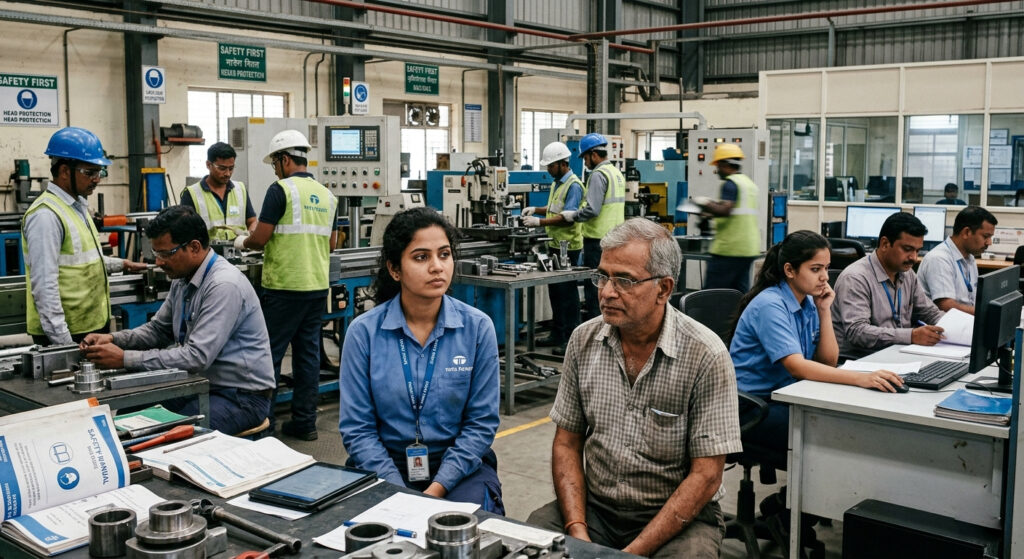
Recent developments show mixed signals:
- India has seen growth in sectors like electronics manufacturing (especially mobile phones)
- FDI inflows have increased over the years
- Infrastructure investments have improved logistics and connectivity
At the same time:
- Manufacturing share in GDP has not significantly increased
- Employment generation has been slower than expected
- Global supply chain disruptions (like COVID-19) have exposed structural weaknesses
This makes the debate around make in india success or failure more relevant than ever.
Why This Topic Is Controversial
The debate around make in india success or failure largely stems from a visible gap between what was promised and what has been delivered. When the initiative was launched, it carried ambitious goals—transforming India into a global manufacturing hub, boosting GDP contribution, and creating millions of jobs. However, the outcomes so far have been mixed, leading to ongoing discussions and disagreements among experts, policymakers, and industry leaders.
Key Triggers Behind the Controversy
Several factors contribute to why this topic remains highly debated:
- Ambitious targets vs actual performance
The initiative set aggressive goals, but the pace of progress has been slower than expected. - Uneven growth across sectors
While industries like electronics have grown rapidly, others such as textiles and heavy manufacturing have lagged behind. - Persistent dependence on imports
India still relies heavily on imports, particularly from China, for raw materials and components. - Questions around job creation
One of the biggest promises was employment generation, but large-scale job growth has not fully materialized.
This gap between expectations and outcomes has created a perception issue, making it difficult to label the initiative as a clear success or failure.
Supporters’ Arguments
Supporters of Make in India emphasize that structural economic transformations take time and cannot be judged in the short term.
- Reforms in infrastructure and policy are long-term investments
- Growth in sectors like mobile manufacturing shows real progress
- Increasing foreign direct investment reflects global confidence
They argue that the make in india impact should be evaluated over decades, not just a few years.
Critics’ Counterpoints
On the other hand, critics highlight gaps in execution and outcomes:
- The initiative has not led to a major shift in manufacturing share
- Policy implementation has been inconsistent across states
- Structural issues like bureaucracy and skill shortages remain unresolved
This sharp contrast in viewpoints continues to fuel the controversy and keeps the topic relevant in economic discussions.
Different Perspectives on Make in India Success or Failure
The discussion around make in india success or failure becomes clearer when we examine the perspectives of both supporters and critics. Each side presents valid arguments based on data, experience, and interpretation of outcomes.
Supporters’ View
Supporters believe that Make in India has laid a strong foundation for long-term industrial growth and should be viewed as a gradual transformation rather than an immediate success story.

Key Arguments in Favor
- Improved Ease of Doing Business
India has significantly improved its global rankings, making it easier for companies to start and operate businesses. - Rise in FDI
Foreign direct investment inflows have increased, signaling trust and confidence from global investors. - Sectoral Success Stories
Industries like electronics, especially mobile manufacturing, have seen rapid expansion and global participation. - Infrastructure Push
Investments in highways, ports, and digital infrastructure have improved logistics and supply chain efficiency. - Strategic Global Positioning
India is increasingly seen as an alternative to China in global supply chains, especially amid geopolitical shifts.
Supporters argue that these developments indicate a steady and meaningful transformation, even if the results are not immediately visible across all sectors.
Critics’ View
Critics, however, argue that the initiative has not fully achieved its core objectives and requires deeper reforms to deliver real impact.
Key Concerns Raised
- Manufacturing Growth Stagnation
The share of manufacturing in GDP has remained relatively flat, raising questions about overall progress. - Job Creation Gap
Despite promises of large-scale employment, actual job creation has been limited. - Policy Implementation Issues
Bureaucratic hurdles and inconsistent policies across states continue to affect business operations. - Import Dependency
India still depends heavily on imports for key components, limiting self-reliance. - Skill Gap
The workforce lacks the necessary skills required for advanced manufacturing sectors.
Critics believe that without addressing these structural challenges, the initiative risks becoming more symbolic than transformative.
Overall, the contrasting perspectives highlight that the answer to make in india success or failure is not black and white. Instead, it lies somewhere in between, shaped by both progress and persistent challenges.
Facts vs Claims
| Aspect | Facts | Claims/Narratives |
| FDI Inflows | Increased significantly since 2014 | Indicates strong global trust |
| Manufacturing GDP Share | Largely unchanged | Claimed to be rapidly growing |
| Job Creation | Moderate growth | Promised large-scale employment |
| Electronics Production | Significant improvement | Used as proof of overall success |
| Ease of Doing Business | Improved rankings | Reflects ground-level ease |
This contrast highlights the importance of separating data from perception.
What People Might Be Missing
The debate around make in india success or failure often overlooks deeper complexities.
1. Structural Challenges Take Time
Transforming a manufacturing ecosystem is not a short-term process. Countries like China took decades to build their dominance.
2. Global Factors Matter
Trade wars, pandemics, and geopolitical shifts influence outcomes beyond domestic policy.
3. Sectoral Variation
Some sectors perform well, while others lag. A blanket judgment may oversimplify reality.
4. Informal Economy Impact
A large part of India’s workforce operates in the informal sector, which is harder to measure and integrate.
5. Policy Evolution
Make in India is not static—it has evolved with new schemes like PLI, which may deliver results over time.
Impact on Society / Economy / Users
Economic Impact
- Boost in foreign investment
- Growth in specific industries
- Improved infrastructure
Social Impact
- Potential job creation (though uneven)
- Skill development initiatives
- Urbanization and migration patterns
Business Impact
- Increased competition
- Opportunities for startups
- Expansion of supply chains
Consumer Impact
- More locally manufactured products
- Competitive pricing
- Better availability of goods
However, the benefits are not evenly distributed, raising questions about inclusivity.
Role of Media and Narrative
Media plays a crucial role in shaping public perception of Make in India.
Positive Narratives:
- Highlight success stories
- Promote national pride
- Emphasize global recognition
Critical Narratives:
- Focus on unmet targets
- Question policy effectiveness
- Highlight economic challenges
Social media amplifies both sides, often simplifying complex issues into binary debates.
This makes it harder for the public to form a nuanced understanding.
Bigger Picture / Future Outlook
The future of Make in India depends on several factors:
1. Policy Consistency
Long-term success requires stable and predictable policies.
2. Skill Development
Bridging the skill gap is essential for manufacturing growth.
3. Technological Adoption
Automation, AI, and digital tools will shape the next phase of industrialization.
4. Global Positioning
India must leverage geopolitical shifts to attract supply chains.
5. Sustainability
Environmental considerations will play a key role in future manufacturing.
Outlook:
Make in India is neither a complete success nor a failure—it is an ongoing experiment in economic transformation.
Conclusion
The question of make in india success or failure does not have a simple answer. The initiative has undeniably brought attention to manufacturing, improved investment flows, and created pockets of success. At the same time, it has fallen short of some of its most ambitious goals, particularly in job creation and structural transformation.
More Read

A balanced policy analysis suggests that Make in India should be viewed as a work in progress rather than a finished outcome. Its long-term success will depend on sustained reforms, better execution, and adaptability to global changes.
Ultimately, the real measure of success will not be slogans or short-term gains, but whether India can build a resilient, inclusive, and globally competitive manufacturing ecosystem.
And that question is still unfolding.