
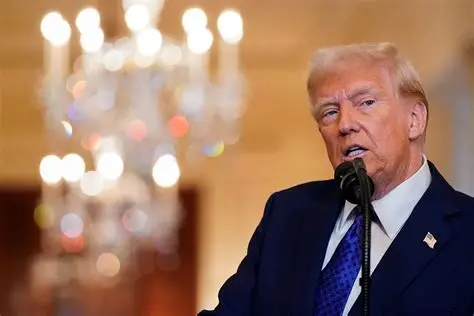
On November 12, 2025, President Donald Trump signed a government-funding bill that officially ended a 43-day shutdown of the federal U.S. government — the longest in U.S. history.
The House of Representatives passed the measure 222-209, the Senate had already approved it, and the legislation restored funding for most federal agencies and reinstated pay for federal workers.
Key features of the bill:
- Full-year funding for the Agriculture Department, military construction and Congress.
- A short-term continuing resolution for other agencies, extending through January 30, 2026.
- Back pay for furloughed federal workers and cancellation of many of the immediate layoffs threatened during the shutdown.
Trump described the closure of the government as unacceptable: “This is no way to run a country.”
The shutdown began on October 1 2025 when Congress failed to pass a continuing resolution for the 2026 fiscal year.
Why it mattered: Scope and significance
Scale & duration
- With 43 days, this shutdown surpassed all previous ones in duration.
- Approximately 750,000 federal workers were furloughed or worked without pay during the shutdown.
Effects on services
- Airports, national parks, certain regulatory agencies were disrupted; flight cancellations and security delays surged.
- Nutrition-assistance programs like SNAP were paused or delayed, affecting millions of low-income Americans.
- Key economic data releases (employment, inflation, etc.) were delayed, hindering the Fed and markets.
Economic cost projections
- The non-partisan Congressional Budget Office (CBO) estimated losses of $7 billion to $14 billion in U.S. GDP depending on how long the shutdown lasted.
- Additional reports flagged that the shutdown could reduce Q4 2025 GDP growth by 1-2 percentage points.
What the new funding bill includes
The bill that ended the shutdown covers major ground:
Back-pay & worker protections: Federal employees will receive missed paychecks; many pending layoffs have been reversed or delayed until January.
Short-term resolution: The bill funds most agencies until January while some major departments get full-year funding. This buys time for Congress to negotiate longer-term appropriations.
Deferred healthcare subsidies: Notably, the bill did not include an extension of enhanced Affordable Care Act (ACA) subsidies demanded by Democrats — a key sticking point. Instead, a promise for a December vote was made.
Short-Term Economic Fallout: Why experts warn
Even though the government reopened, analysts caution that short-term and possibly medium-term economic effects will persist.
Worker income and consumer spending
- Federal employees missed multiple paychecks, cut spending, and some took temporary jobs to make ends meet.
Lower household income in these large segments can reduce overall consumer spending, which is critical for U.S. economic growth.
Business & market impact
- Markets regained some optimism after the deal, but uncertainty prolonging the shutdown created volatility.
- Delayed economic data releases made it harder for businesses and investors to plan, hindering decisions on hiring, investment and borrowing.
Government spending delays & ripple effects
- Government contracts got delayed; vendors and contractors faced cash-flow disruptions.
- The CBO noted that while many effects will reverse, the “hours lost” from workers are irrecoverable — meaning permanent losses in output.
- Some sectors like travel, hospitality, and logistics were especially hit during the shutdown and face challenges recovering quickly.
Psychological / confidence effects
- Consumer sentiment dropped to a 31/2-year low in early November.
- Business confidence also suffers when government instability becomes pronounced — which may delay job creation, hiring and capital investment.
Government & rating risks
- Prolonged shutdowns raise concerns about U.S. fiscal and governance credibility. Some experts flagged a risk of credit-rating downgrades if such standoffs persist.
- Interruptions in critical services and payments signal to markets and foreign investors that U.S. government functioning is vulnerable — which can increase borrowing costs.
Political Implications & Stakes
Short-term win for Republicans
Some analysts believe President Trump and the Republican leadership came out of the shutdown with modest political gain: they held firm negotiation positions and reopened the government without conceding on major demands (e.g., ACA subsidy extension).
However, division persists — some Democrats view the deal as a betrayal because key issues were postponed rather than resolved.
Long-term vulnerabilities
Polling shows many Americans blamed Republicans more than Democrats for the shutdown. That could hurt GOP prospects in the 2026 mid-term elections if memories of the crisis linger.
For Democrats, failure to secure healthcare protections might energise them to use that as a campaign issue going forward.
Institutional trust & governance
The shutdown underscores deep partisan divisions and raises questions about the ability of U.S. institutions to manage essential governance functions. Recent events (like cancelled flights, food-aid interruptions) reinforce concerns among the electorate.
What to watch going forward

Economic data flow: With agencies reopening, how quickly will jobs, inflation, consumer spending and manufacturing numbers resume? Gaps or delays may complicate forecasting.
Short-term funding negotiations: Congress now has until late January to finish the full appropriation process — risk of another standoff looms.
Healthcare subsidies: The delayed vote in December on ACA tax credits is a flashpoint — failure to extend could trigger premium spikes and public backlash.
Federal employee morale & staffing: The work-force disruption, layoffs threats and freeze of pay may lead to long-term attrition in critical agencies (FAA, TSA, IRS) with service consequences.
Market & credit watch: Any signs of renewed gridlock or borrowing-cost rises could prompt rating-agency scrutiny of U.S. debt and governance credibility.
More Read

Fiscal policy impact: The backlog of omitted spending during the shutdown may push for catch-up stimulus or spending surge in early 2026, raising inflation/government-debt concerns.
Conclusion
While the reopening of the U.S. government under President Trump brings relief to federal workers, contractors and citizens using services, the economic toll of the 43-day shutdown is far from erased. Losses of $7-14 billion, delayed payments, disrupted services and a dent in confidence all signal that recovery will be gradual rather than instant.
For the administration and Congress, the true test is not only reopening the government, but restoring stability, delivering on key policy issues (like healthcare subsidies), and avoiding future shutdowns that impose both human and economic costs.