

Ahoi Ashtami 2026: Date, Star-Sighting Time and Why Mothers Keep This Fast
Ahoi Ashtami 2026 falls on 1 November. Find the puja muhurat, city-wise star-sighting time, Ahoi Mata katha, vrat vidhi and the significance of Radha Kund Snan.

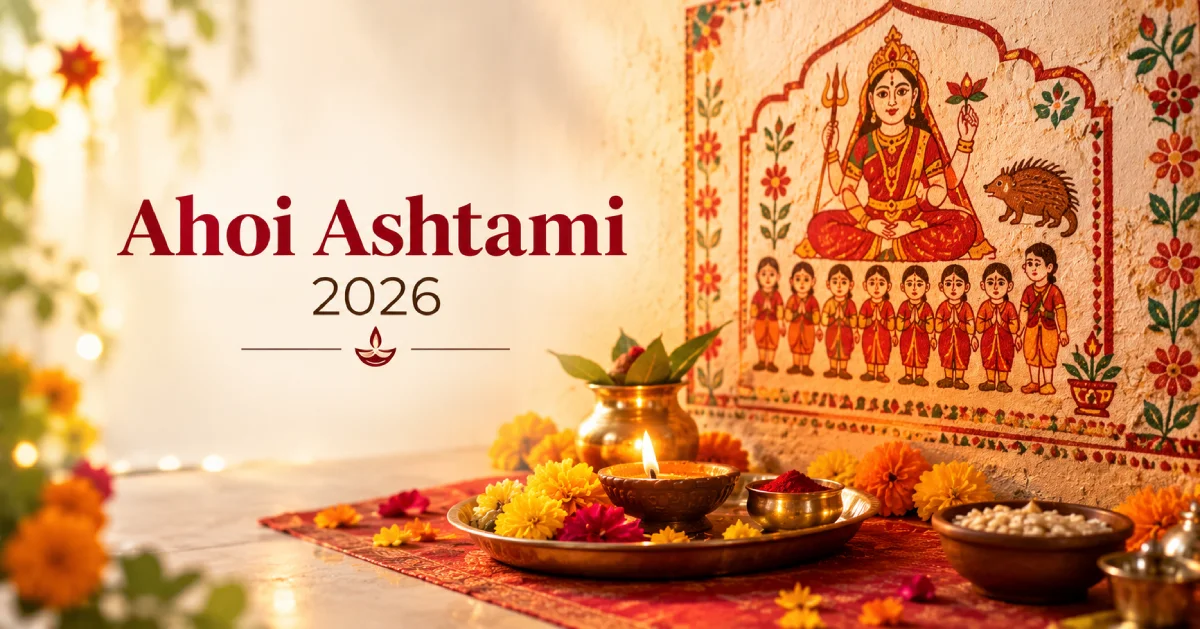
Ahoi Ashtami 2026: Date, Star-Sighting Time and Why Mothers Keep This Fast
Mom's prayers for her kids are frequently expressed in little traditions that have actually been passed down through the generations. One such Hindu festival is Ahoi Ashtami where the mothers pray for the good health, happiness, long life and prosperity of their children.
As compared to Karwa Chauth where many women wait for the moon to appear before they break their fast, the evening sighting of stars is considered to be a sacred event and is linked to Ahoi Ashtami. The festival is celebrated in North Indian states of Haryana, Punjab, Delhi, Uttar Pradesh etc. in particular.
Ahoi Ashtami 2026 will be celebrated on Sunday 1st November. On this day, mothers fast and celebrate Ahoi Mata auspicion, hear the vrat katha and pray for the good health of the kids.
Ahoi Ashtami 2026 Date and Puja Timings
The eighth day of the Hindu lunar calendar in the month of Krishna Paksha (waning moon phase) is called Ahoi Ashtami.
Let’s have a look at the important details of Ahoi Ashtami 2026:
-
Date: Sunday, 1 November 2026
-
Puja Muhurat in Delhi: The Puja Muhurat will be from 5:36 PM to 6:54 PM.
-
The time for sighting the stars in Delhi: About 6 pm
-
Ashtami Tithi starts: 2:51 PM on 1st November
-
Ashtami Tithi ends at: 1:10 PM on 2 November
The puja and timing for sighting of the star could vary from city to city. For instance, in Chandigarh, the stars are expected to appear at around 6:00 PM whereas in Ludhiana, they are expected to appear at 6:03 PM.
These are rough estimates and the time at which the stars are seen can vary depending on the local weather conditions. The hours and rituals of the families should be followed.
Why Ahoi Ashtami Is Kept by Mothers
Ahoi Ashtami is observed by the mothers to ensure health, safety, long life and prosperity of their children.
During the day many mothers observe a fast while in the evening they chant the Ahoi Mata puja. They wish their children to be healthy, grow up happily and to face challenges in life.
In the past traditions the fast was especially linked with the health of the sons. Ahoi Ashtami is celebrated by many families these days on behalf of the welfare of all their children including their daughters.
The festival isn't just about abstaining from food. It is also a symbol of the mother's love, belief and worry about the future of her children. The prayers and rituals offer a chance to the family to unite and to carry on traditions handed down to them from generation to generation.
Ahoi Ashtami Puja Vidhi: How Is the Fast Observed?
The rituals can vary from family to family and place to place, but the general way of celebrating Ahoi Ashtami include following rituals.
1. Start Each Day With Prayer
Many women get up, take a bath and take a sankalp or a resolve to do the fast. Some fast for just food and water while others choose a type of fasting based on their family tradition and/or health.
2. Prepare the Puja Area
Puja area is cleaned up for the evening puja. Ahoi Mata can be drawn on a wall using geru, a red earth pigment, or a picture of her drawn on a wall.
A figure known as a syahu, which is often identified with the porcupine from vrat katha, and Ahoi Mata and her children are some of the traditional drawings included.
3. Organise the Puja Samagri
Some of the other common puja items are diya, roli, rice grains, flowers, water, sweets and fruits. Artifacts will vary from region to region and family to family.
4. Worship Ahoi Mata in the Evening
Women light the diya, pray to Ahoi mata. They hear/read Ahoi Ashtami vrat katha and pray for the well being of their children.
In the past, the fast would be completed once the stars appear in the night sky. Women serve out water/ arghya based on their traditions and customs and then break their fast.
Other families have their own tradition, and wait for the moon. The star-sighting tradition is followed during Ahoi Ashtami as moons rise late during this day.
Ahoi Mata Katha: The Story Behind the Festival
Ahoi Ashtami vrat katha is an important component to the festival. The core of the story remains consistent, but with variations in each region and family; the story is related to the connection between Ahoi Mata and the prayers a mother makes for her children.
The traditional tale, once a woman went out to the forest to take soil for domestic needs. In the process of digging a hole, she hurt a small animal that was there. The mother was greatly upset.
In the story, the woman was later to lose her children. She felt sad and was sorry and asked God to forgive her and for his blessings. It became a custom to pray and offer devotion to her to look after children and her prayers and devotion became linked to that of Ahoi Mata.
The narrative is recalled as an example of living beings' caring and responsibility, as well as compassion. It also shows the strong affection of a mother towards her children.
Listening the vrat katha during Ahoi Ashtami keeps the devotees of the day in remembrance of the values of faith, kindness and sincere prayer.
Why Is Radha Kund Snan Celebrated on Ahoi Ashtami?
Radha Kund, near Govardhan in Mathura area of Uttar Pradesh is a place of religious significance for devotees of Lord Krishna.
One popular ritual during Ahoi Ashtami is to take a dip in the holy place Radha Kund at midnight. This ritual is called Radha Kund Snan which is particularly linked to the wishes for children and prayers for good family life.
Fervent devotees go to the holy pond and carry out religious ceremonies in accordance with the customs and believing in the local religion. The festival and tradition are of special importance in the Braj region, where many festivals and traditions are related to the life and stories of Lord Krishna.
Apart from this, Radha Kund Snan is a local religious custom and not practiced by all the families during the celebration of Ahoi Ashtami. Most of the families observe the festival at home and do fasting and puja, listen to the vrat katha and pray.
Ahoi Ashtami and Karwa Chauth: What Is the Difference?
Both Ahoi Ashtami and Karwa Chauth are significant Hindu fasting days which are celebrated in a number of households in North India. There are differences in their purposes and rituals, however.
Married women generally celebrate the festival of Karwa Chauth with the aim of wishing their husbands long life and well-being. The fast is usually observed on the sighting of the moon.
However, Ahoi Ashtami is more of an auspicious day for the prayers for children's health, happiness and prolonging their lives. Traditionally the fast is finished once stars are sighted in the evening.
Both festivals provide an opportunity for Hindu families to talk about family and their devotion and prayer to the gods, and have distinct features.
Important Things to Remember Before Observing Ahoi Ashtami
Ahoi Ashtami is a significant festival, however the way of celebrating the festival may vary from house to house.
-
Please refer to the local time for puja/stars sighting before festival.
-
Prepare all the puja items in advance to avoid will work to prepare at the last minute.
-
Take part in the worship and fasting of your family, traditionally, in the way they do.
-
For those with medical conditions, who need medication that needs to be taken with meals, pregnant or breastfeeding women, please speak with a health care professional before trying a strict fast.
-
Keep in mind, the whole concept of the festival is to pray, be devoted and wish well for your children.
Conclusion
Ahoi Ashtami is not a day of fasting but a day of celebrations. It is a tradition that is a symbol of a mother's love, hopes and prayers for her sons and daughters. All these rituals have significance for the families who celebrate this festival from drawing Ahoi Mata on the wall to waiting for the stars to appear in the sky.
Ahoi Ashtami will be celebrated on Sunday, 1st November in 2026. This day will be celebrated with prayers and traditional rituals by the mothers of the state of Haryana, Punjab, Delhi, UP and elsewhere.
The festival is now enjoyed in various ways at home and by the regional traditions like Radha Kund Snan which makes it a source of bringing together families in the spirit of faith, devotion and the desire for a happy and healthy life for their children.








Comments (0)