Introduction: Understanding Smart Cities India Progress Today
India’s rapid urban expansion has made cities both engines of growth and centers of strain. Traffic congestion, pollution, poor infrastructure, and rising population pressures have forced policymakers to rethink how cities function. In this context, the concept of smart cities emerged as a transformative solution. But the real question remains — what is the actual smart cities India progress, and how much of the vision has translated into reality?
Launched with ambitious goals, the Smart Cities Mission promised a future where technology, sustainability, and efficient governance would redefine urban living. From smart traffic systems to digital governance platforms, the initiative aimed to create cities that are not just modern but also livable and inclusive.
However, nearly a decade later, the conversation around smart cities India progress is no longer just about innovation — it is about execution, inclusivity, and long-term sustainability. While some cities showcase visible improvements, others continue to face delays, structural inefficiencies, and funding gaps.
This article provides a deep, balanced, and SEO-optimized analysis of smart cities in India, exploring progress, challenges, controversies, and the road ahead.
Background: The Vision Behind Smart Cities in India
Origin of the Smart Cities Mission
The Smart Cities Mission was launched in 2015 with a clear objective — to develop 100 cities that offer better infrastructure, improved quality of life, and sustainable urban solutions. Inspired by global models, the initiative focused on integrating technology with governance.
Core Objectives of Smart Cities India
| Objective |
Details |
| Smart Infrastructure |
Roads, water, electricity |
| Digital Governance |
E-services, online systems |
| Sustainable Development |
Green energy, waste management |
| Smart Mobility |
Traffic systems, public transport |
| Citizen Engagement |
Participation in governance |
The mission introduced a competitive model where cities submitted proposals based on local needs, making each smart city unique in its approach.
Smart Cities India Progress: What Has Been Achieved So Far
The journey of
smart cities India progress reflects a complex mix of visible achievements and ongoing gaps. Since the launch of the Smart Cities Mission, thousands of projects have been proposed across selected cities, with a significant number already completed. These developments mark an important shift in how urban
India is approaching infrastructure, governance, and technology integration.
One of the most notable outcomes has been the establishment of
Integrated Command and Control Centers (ICCCs). These centers act as the digital backbone of smart cities, enabling real-time monitoring of traffic, public safety, and essential services. Alongside this, cities have seen improvements in
smart roads, better urban infrastructure, and intelligent traffic systems, which aim to reduce congestion and improve daily commuting experiences.
Digital transformation is another key area where
smart cities India progress is clearly visible. Public Wi-Fi zones, online service platforms, and app-based governance systems have made it easier for citizens to access services such as bill payments, complaints, and documentation. Additionally,
smart lighting systems have contributed to energy efficiency, reducing electricity consumption while improving public safety.
At the
ground level, these advancements translate into tangible improvements. Real-time traffic monitoring has helped manage congestion in busy areas, surveillance systems have strengthened urban security, and digital platforms have streamlined administrative processes. However, despite these successes, the progress is not uniform. Some cities have advanced rapidly, while others continue to struggle, highlighting the uneven nature of urban transformation in India.
Smart Cities Challenges India: Why Progress Is Not Uniform
The uneven pace of
smart cities India progress cannot be understood without examining the
smart cities challenges India continues to face. These challenges are structural, financial, and social, making implementation far more complex than initially anticipated.
One of the biggest hurdles is
financial constraints. Large-scale urban projects require sustained investment, and limited funding often slows down execution. Even when funds are allocated, delays in disbursement and rising project costs create additional pressure.
Another critical issue is
administrative complexity. Smart city projects involve coordination between multiple government departments, private contractors, and local authorities. This often leads to delays, inefficiencies, and fragmented execution.
The
digital divide further complicates the situation. While digital services are expanding, not all citizens have access to smartphones, internet connectivity, or digital literacy. This limits the inclusivity of smart city initiatives and raises concerns about who truly benefits from these developments.
Urban inequality is also a major concern. In many cases, development is concentrated in selected zones within a city, creating pockets of advanced infrastructure while other areas remain underdeveloped. This selective approach challenges the idea of holistic urban growth.
Finally,
sustainability issues raise questions about the long-term viability of smart city infrastructure. Maintaining advanced systems requires continuous funding, technical expertise, and efficient governance — factors that are not always guaranteed.
[caption id="attachment_9766" align="alignnone" width="1024"]

Social media platforms amplify debates around political films, extending their influence far beyond theaters.[/caption]
Why Smart Cities India Progress Is a Debated Topic
The discussion around
smart cities India progress has become increasingly debated due to the gap between expectations and reality. While the initiative promised a transformation of urban living, the outcomes have been mixed.
Key concerns include
unequal development across cities, where some regions show significant progress while others lag behind. The focus on
specific zones rather than entire cities has also drawn criticism, as it creates isolated “smart areas” instead of comprehensive urban improvement.
Additionally,
data privacy and surveillance concerns have emerged with the increased use of monitoring systems. Citizens and experts alike question how data is collected, stored, and used. Delays in project completion further add to skepticism, making people question the efficiency of implementation.
Different Perspectives on Smart Cities India Progress
Supporters’ View: Why Smart Cities India Progress Matters
Supporters argue that despite challenges, the
smart cities India progress achieved so far is a significant step forward. They highlight improvements in infrastructure, better delivery of public services, and the integration of technology into governance.
From this perspective, smart cities are seen as a long-term investment. Proponents believe that
digital platforms improve efficiency, attract investment, and create new economic opportunities. They also emphasize that large-scale urban transformation takes time, and the current progress should be viewed as a foundation for future growth.
Critics’ View: Concerns About Smart Cities Challenges India
Critics, however, take a more cautious stance. They argue that the initiative places too much emphasis on technology while neglecting basic urban issues such as housing, sanitation, and public health.
Concerns about
lack of inclusivity remain central to the debate. Many believe that marginalized communities are not adequately benefiting from smart city projects. Additionally,
limited transparency and accountability in execution raise questions about governance.
Perhaps the most significant criticism is the risk of creating
isolated “smart zones”, where development is concentrated in select areas, leaving the rest of the city behind. This, critics argue, undermines the broader goal of equitable urban development.
Overall, the reality of
smart cities India progress lies somewhere between optimism and criticism. It is a work in progress — one that reflects both the potential and the challenges of transforming urban India.
Smart Cities India Progress: Facts vs Claims
Verified Facts About Smart Cities India Progress
- Thousands of projects have been initiated and completed
- Digital governance systems are expanding
- Infrastructure improvements are visible in select cities
Common Claims About Smart Cities India
- All smart cities are fully developed
- Technology alone can solve urban challenges
- Benefits are equally distributed
Reality Check
The actual smart cities India progress lies between optimism and criticism, reflecting both success and ongoing challenges.
Hidden Insights: What People Miss About Smart Cities India Progress
Beyond Technology
One major misconception is that smart cities are only about technology. In reality:
- Governance reforms are equally important
- Citizen participation plays a key role
- Policy continuity is critical for long-term success
Learning Curve in Smart Cities India
Cities are experimenting, adapting, and evolving. Mistakes and delays are part of this process.
Impact of Smart Cities India Progress on Society and Economy
Social Impact of Smart Cities India Progress
- Improved safety through surveillance systems
- Better access to public services
- Increased citizen engagement
[caption id="attachment_9737" align="alignnone" width="1024"]
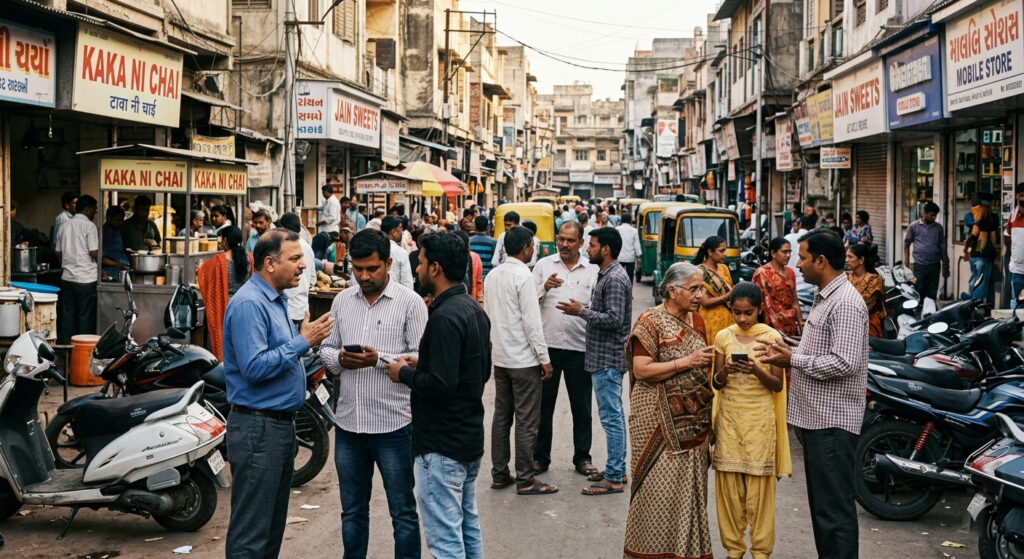
People discussing and reacting to Article 370 movie on streets and social media[/caption]
Economic Impact
- Growth in real estate and infrastructure sectors
- Job creation in technology and construction
- Increased investment opportunities
User-Level Impact
| Area |
Impact |
| Transport |
Reduced travel time |
| Utilities |
Improved reliability |
| Governance |
Faster service delivery |
However, benefits are not evenly distributed, especially among lower-income groups.
Role of Media in Shaping Smart Cities India Progress Narrative
Positive Media Coverage
- Highlights successful projects
- Promotes innovation and development
Critical Media Coverage
- Focuses on delays and inefficiencies
- Raises concerns about inclusivity and privacy
Media narratives significantly influence public perception of smart cities India progress.
Smart Cities India Progress and the Digital Transformation of Urban India
Technology Driving Smart Cities India Progress
- Artificial Intelligence for traffic management
- IoT devices for smart infrastructure
- Data analytics for governance
Challenges in Digital Transformation
- Cybersecurity risks
- Data privacy concerns
- Lack of digital literacy
Future of Smart Cities India Progress: What Lies Ahead
Emerging Trends in Smart Cities India
- Integration of renewable energy
- Climate-resilient infrastructure
- Smart mobility solutions
Policy and Governance Outlook
- Stronger regulatory frameworks
- Increased focus on inclusivity
- Continuous monitoring and evaluation
Long-Term Vision
The future of smart cities India progress depends on balancing technology, governance, and citizen needs.
Conclusion: The Real Story of Smart Cities India Progress
The story of smart cities India progress is neither a complete success nor a failure. It is an evolving journey marked by ambition, experimentation, and challenges.
[ruby_related heading="More Read" total=5 layout=1 offset=5]
While the initiative has introduced significant improvements in infrastructure and governance, it has also exposed deeper structural issues in urban planning. The smart cities challenges India faces highlight the need for a more inclusive, sustainable, and holistic approach.
Ultimately, smart cities are not just about advanced technology — they are about creating better living conditions for all citizens. The real success of the mission will depend on how effectively it bridges the gap between vision and reality.
The future of India’s cities will not just be smart — it will be defined by how intelligently they address their challenges.
FAQ: Smart Cities India Progress Explained
1. What is smart cities India progress?
It refers to the development of urban infrastructure, digital governance, and sustainable systems under the Smart Cities Mission.
2. Why is smart cities India progress controversial?
Because development is uneven, and critics argue that benefits are limited and not inclusive.
3. What are smart cities challenges India faces?
Funding issues, administrative delays, digital divide, and unequal development are major challenges.
4. Are smart cities in India successful?
Partially. Some cities show progress, but overall results are mixed.
5. What impact do smart cities have on people?
They improve services and infrastructure but do not benefit all citizens equally.

















Comments (0)